+91 83682 47758
info@medivisorhealth.com
Medivisor India Treatment Logo
  • Home
    • About Us
    • Our Services
    • Our Team
    • Our Safety Measures
    • Loading treatments...
    • Loading hospitals...
    • Loading doctors...
    • Treatment Cost
    • Treatment Process
    • Visa Process
    • Travel Guide
    • FAQs
    • Why Medivisor
    • Success Stories
    • Patient Activities
    • Social Activities
    • News Coverage
    • Blog
  • Become a Partner

Medivisor India Treatment is a trusted New Delhi-based medical travel company assisting international patients with advanced, affordable, and seamless treatment in India.

  • Medivisor House 359, Sector 1, Vaishali, Ghaziabad, (Delhi/NCR) India
  • +91 8368 247 758
  • info@medivisorhealth.com

About Us

  • About Us
  • Our Services
  • Our Team
  • Our Medical Advisors
  • Our Safety Measures
  • Join Our Network
  • Contact Us

India Treatment

  • Hospitals
  • Treatments
  • Treatment Cost
  • Treatment Process
  • Visa Process
  • Travel Guide
  • FAQs
  • Why Medivisor

Gallery

  • Patient Testimonials
  • Patient Activities
  • News Coverage
  • Blog

Get in Touch

© 2026 Medivisor India Treatment. All rights reserved.

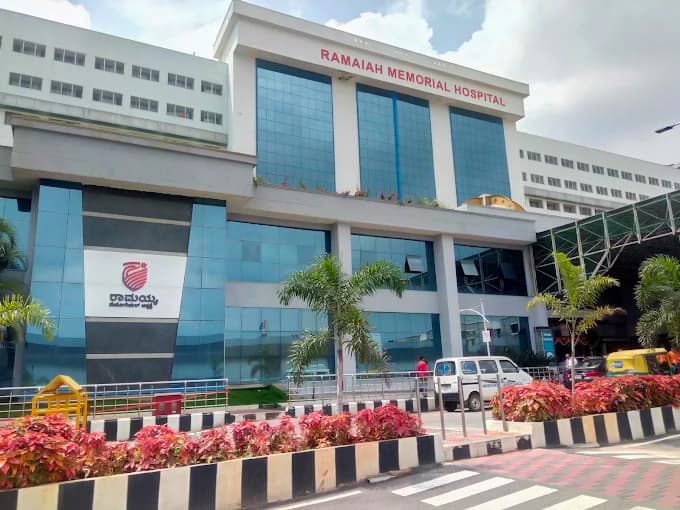
Ramaiah Memorial Hospital

Ramaiah Memorial Hospital

New BEL Rd, M S Ramaiah Nagar, MSRIT Post, Bengaluru, Karnataka 560054

  1. Home
  2. Hospitals
  3. Ramaiah Memorial Hospital

Quick Overview

2004

Established

Multi-Super

Speciality

500

Beds

350

Doctors

Ramaiah Memorial Hospital - Best Hospital in Bangalore, India

Ramaiah Memorial Hospital (RMH) is a premier multi-super specialty hospital located in Bengaluru, India. RMH has established itself as a hub of medical excellence, recently achieving the prestigious Joint Commission International (JCI) Gold Seal of Approval. This accreditation reinforces its commitment to international safety and quality standards, making it one of an elite group of JCI-accredited hospitals globally. The hospital provides a complete ecosystem of quaternary care, offering expert treatment for complex and specialized medical conditions.

Why Patients Trust Ramaiah Memorial Hospital

Ramaiah Memorial Hospital provides a unique combination of clinical rigor and infrastructure that attracts patients from across the globe. Recognized as one of the World’s Best Hospitals by Newsweek, RMH prioritizes infection control, patient safety, and optimal clinical outcomes. Patients benefit from precision-driven care, modern technology, and clinicians trained to deliver international standards of treatment. Through transformative global collaborations, the hospital brings cutting-edge medical innovation directly to the bedside.

Excellence in Advanced Care

Ramaiah Memorial Hospital specializes in high-complexity medical treatments across several Institutes of Excellence, including:

  • Advanced interventional cardiology and cardiothoracic surgery

  • Comprehensive oncosciences featuring robotic-assisted oncosurgery

  • Complex brain and spine tumor surgeries and stroke interventions

  • Leading-edge renal transplantation and robotic urological surgeries

  • High-end endoscopy and gastro-enteric sciences

  • FACT-accredited bone marrow transplants and cellular therapy

World-Class Facilities & Technology

Ramaiah Memorial Hospital features world-class infrastructure and advanced medical technology, including:

  • da Vinci Surgical System for minimally invasive robotic excellence

  • Dual LINACs and Intraoperative Radiation Therapy (IORT) capabilities

  • Comprehensive Stroke and Chest Pain Centers certified by the AHA and ASA

  • Advanced imaging with PET-CT, multiple MRI units, and high-slice CT scanners

  • Specialized BMT ICUs, Transplant ICUs, and negative-pressure isolation rooms

  • State-of-the-art stem cell and cellular therapy unit

Easy Access for Patients

Strategically located in the tech-hub of Bengaluru, Ramaiah Memorial Hospital offers excellent connectivity and convenient access for domestic and international patients. Premium accommodations, streamlined travel options, and patient-friendly infrastructure ensure a smooth and stress-free healthcare experience. The hospital's proximity to major transport routes and international arrival points makes it a preferred destination for global visitors seeking high-complexity medical interventions in a world-class environment.

Ramaiah Memorial Hospital at a Glance

Ramaiah Memorial Hospital represents clinical excellence, advanced technology, and holistic care:

  • Multi-specialty expertise across all major medical and surgical disciplines

  • Global collaborations with institutions like Mount Sinai International, New York

  • Highly experienced clinicians and multidisciplinary transplant teams

  • Comprehensive clinical, emergency, and rehabilitation services
May we help you?

Enter digits only (6-15 digits). We'll add your country code.

Ramaiah Memorial Hospital

Pericardiocentesis
Pericardiocentesis

Pericardiectomy is a surgical procedure to remove part or all of the pericardium, the thin sac surrounding the heart. This surgery is performed to allow the heart to move and pump freely when the sac has become diseased, scarred, or restrictive.

  • Persistent fatigue or weakness during physical exertion

  • Significant swelling in the legs, ankles, or abdomen (edema)

  • Shortness of breath, especially when lying down or exercising

  • Chronic chest pain that does not improve with medication

  • Signs of heart failure caused by a restrictive or stiff heart sac

  • Constrictive Pericarditis: The sac becomes stiff, thick, or calcified, preventing heart expansion.

  • Recurrent Pericarditis: Chronic inflammation that fails to respond to standard medical treatments.

  • Persistent Pericardial Effusion: Frequent or dangerous buildup of fluid around the heart.

  • Partial Agenesis: A rare congenital defect where part of the pericardium is missing.

  • Post-Viral Scarring: Long-term thickening of the sac following a severe viral infection.

  • Anesthesia: The surgery is performed under general anesthesia and typically takes 2 to 3 hours.

  • Approach: Surgeons usually use a median sternotomy (breastbone incision) to access the heart.

  • Support: A heart-lung bypass machine is often used to maintain circulation during the surgery.

  • Removal: The surgeon carefully removes the damaged or scarred pericardial tissue.

  • Closing: Once the heart is free to expand fully, the incision is closed with sutures or staples.

  • Hospital Stay: Patients typically remain in the hospital for 5 to 7 days for close monitoring.

  • Monitoring: The medical team tracks heart rhythm, fluid levels, and lung function post-surgery.

  • Initial Healing: Pain management and respiratory therapy are prioritized during the first week.

  • Full Recovery: It generally takes 6 to 8 weeks to return to normal daily activities and work.

  • Activity: Gradual walking and light movement are encouraged to prevent blood clots.

  • Surgical Cure: This is often a definitive cure for constrictive pericarditis.

  • Survival Rate: Long-term survival is approximately 80% at 5 years, depending on the cause.

  • Potential Risks: Includes standard heart surgery risks like infection, bleeding, or blood clots.

  • Arrhythmias: Some patients may experience temporary abnormal heart rhythms during recovery.

  • Success Factor: Outcomes are generally excellent when the surgery is performed before heart damage occurs.

  • Restores the heart's ability to fill with blood and expand normally

  • Immediate relief from the restrictive pressure causing heart failure symptoms

  • Significant reduction in fluid retention and swelling throughout the body

  • Improved physical stamina and the ability to return to an active lifestyle

  • Eliminates the need for long-term anti-inflammatory medications in chronic cases

May we help you?

Enter digits only (6-15 digits). We'll add your country code.