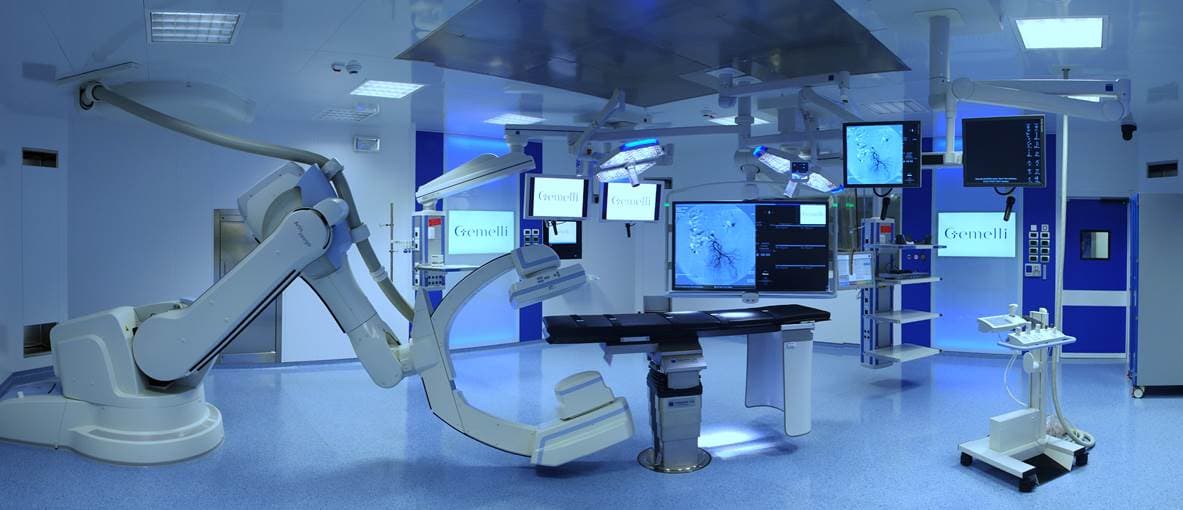
Hybrid Operating Theatre
Hybrid Operating Theatre: Integrated Surgical Technology
A Hybrid Operating Theatre (Hybrid OR) represents a major advancement in modern surgical infrastructure. By integrating high-definition diagnostic imaging equipment—such as C-arm fluoroscopy, intraoperative CT, and intraoperative MRI—directly into a sterile operating room, the Hybrid OR merges interventional radiology with open surgical capabilities. This allows multidisciplinary surgical teams to perform minimally invasive endovascular procedures, open surgical repairs, and real-time intraoperative verification within a single sterile session.
How the Technology Works: Integrated Imaging & Ergonomics
The defining feature of a Hybrid Operating Theatre is the seamless integration of high-resolution imaging platforms with specialized surgical tables and robotic arms:
Fixed Advanced Imaging Systems: Robotic ceiling-mounted or floor-mounted C-arms deliver high-speed 2D fluoroscopy, 3D cone-beam CT (CBCT), and digital subtraction angiography (DSA) directly over the operating table.
Radiolucent Multi-Axis Tables: Carbon-fiber surgical tables synchronize motion with the imaging systems, allowing precise patient positioning without obscuring X-ray or CT image quality.
Unified Control Hubs: Centralized touchscreen consoles allow the surgical team to toggle instantly between diagnostic imaging feeds, navigation software, and vital sign monitoring.
Technical Features & Intraoperative Capabilities
A Hybrid OR combines advanced technical capabilities designed to enhance surgical speed, safety, and diagnostic accuracy:
Live Image Guidance & Fusion Software
Surgeons can superimpose pre-operative 3D CT or MRI scans onto live fluoroscopic feeds in real time. This "roadmap" software acts as a surgical GPS, guiding catheters and hardware through delicate blood vessels and spinal structures with sub-millimeter precision.
Immediate Intraoperative Verification
Before closing an incision, the clinical team can perform an immediate 3D CT or angiogram to confirm stent expansion, valve seating, tumor resection, or fracture alignment, eliminating the need for post-operative re-interventions.
Seamless Conversion Capabilities
If a keyhole or catheter-based procedure encounters unexpected complications, the multidisciplinary team can immediately convert to a traditional open surgical repair without moving the patient or compromising sterility.
Key Clinical Applications
The Hybrid Operating Theatre is utilized across multiple high-stakes medical specialties:
Complex Cardiac Interventions: Essential for minimally invasive Structural Heart procedures like Transcatheter Aortic Valve Implantation (TAVI/TAVR), endovascular mitral valve repairs, and complex electrophysiology ablations.
Vascular & Endovascular Surgery: Used for Endovascular Aneurysm Repair (EVAR/TEVAR), complex carotid stenting, and revascularization procedures for severe peripheral artery disease.
Neurosurgery & Spine Reconstruction: Guides keyhole aneurysm clipping, endovascular stroke thrombectomies, intraoperative tumor resections, and precision pedicle screw placement.
Polytrauma & Emergency Interventions: Enables rapid internal damage control, simultaneous hemorrhage localization via angiography, and immediate surgical stabilization during the critical "golden hour."
Engineering Advantages, Cost & Patient Benefits
By unifying diagnostic radiology and surgical intervention, the Hybrid OR provides substantial clinical, administrative, and safety advantages:
Cost Efficiency: While procedures conducted in a Hybrid OR range from $35,000 to $90,000+ in the US or Western Europe, international patients can access state-of-the-art Hybrid OR suites in JCI-accredited Indian hospitals for $8,000 to $18,000 (achieving 60% to 75% savings across complex vascular, cardiac, or neurosurgical procedures).
Minimized Patient Transfer Risks: Performing pre-procedural imaging, surgical treatment, and post-procedure verification in a single room eliminates the hazards of moving critically ill or anesthetized patients between departments.
Reduced Surgical Trauma & Exposure: High-precision real-time guidance allows for smaller incisions, reduced radiation exposure via optimized pulsed imaging, lower contrast agent dosages, and minimal blood loss.
Accelerated Recovery Times: Combining diagnostic checks and treatment into a single session reduces overall time under anesthesia, leading to shorter ICU stays and faster functional recovery.
Frequently Asked Questions (FAQs)
What is the main difference between a standard operating room and a Hybrid OR?
A standard operating room is designed primarily for physical surgical interventions and relies on portable X-ray equipment (C-arms). A Hybrid OR integrates fixed, high-performance diagnostic imaging systems (such as CT, MRI, or advanced angiography platforms) directly into the sterile environment, allowing for real-time 3D visualization and immediate post-procedure checks.
Why is a Hybrid OR safer for complex endovascular or heart procedures?
It combines the skills of interventional cardiologists, vascular surgeons, and radiologists in a single room. If a catheter-based procedure requires immediate open surgical intervention, the room is already fully equipped and sterile, allowing the team to transition instantly without delay.
Does intraoperative imaging in a Hybrid OR increase radiation exposure?
No. Modern Hybrid OR imaging systems feature advanced radiation protection protocols, including automated dose management, pulsed fluoroscopy, and image fusion technology, which reduce overall radiation exposure for both the patient and the medical team compared to traditional mobile imaging units.