Amputation (Cancer)
Amputation
Amputation for cancer is a definitive surgical procedure to remove all or part of a limb when a malignant tumour, such as a bone or soft tissue sarcoma, cannot be safely or functionally treated with limb-salvage surgery. While limb salvage is now the gold standard (successful in up to 95% of cases), amputation remains a critical life-saving or palliative option for specific advanced scenarios. The focus has shifted toward "Pre-prosthetic Surgery," where nerves are rewired during the amputation to minimize phantom pain and improve control over high-tech bionic limbs.
When You Should Consider Amputation
Neurovascular Involvement: When the cancer has invaded the major nerves and blood vessels, meaning a functional limb cannot be preserved even if the tumour is removed.
Failed Limb Salvage: When previous attempts to save the limb have failed to achieve clear (negative) margins or the cancer has reoccurred multiple times.
Extensive Tissue Loss: If removing the tumour would require taking so much bone or muscle that the remaining limb would be non-functional or a source of chronic pain.
Palliative Management: To relieve intractable pain, manage severe bleeding, or treat an infected, "fungating" tumour in advanced metastatic disease.
Infection Risks: When a tumour is associated with a deep-seated infection that makes the use of internal metal implants (for limb salvage) too dangerous.
Common Types of Cancer Amputation
The level of amputation is determined by the need to achieve clear surgical margins while preserving the best possible site for a future prosthesis.
Lower Limb:
Transtibial (Below-Knee): Preserves the natural knee joint, offering significantly better functional outcomes and lower energy expenditure for walking.
Transfemoral (Above-Knee): Performed through the thigh bone; requires more energy for mobility due to the loss of the natural knee joint.
Hip Disarticulation: Removal of the entire leg at the hip joint.
Hemipelvectomy (Hindquarter): A radical procedure involving the removal of the entire leg and part of the pelvis, usually for tumours involving the pelvic bone itself.
Upper Limb:
Transradial / Transhumeral: Amputation below or above the elbow.
Forequarter Amputation: Removal of the entire arm, including the shoulder blade (scapula) and collarbone (clavicle), for advanced shoulder or chest wall tumours.
How an Amputation Is Performed
Anaesthesia: Performed under general anaesthesia, typically combined with a regional nerve block or epidural to "numb" the nerves before they are cut, which helps prevent future phantom pain.
Margin Verification: The surgeon identifies the highest point of the tumour and moves a safe distance (usually 5–10 cm) above it to ensure the bone is cut through a completely healthy area.
TMR (Targeted Muscle Reinnervation): A 2026 standard technique where severed nerves are "plugged" into nearby muscles. This prevents painful "neuromas" and allows for the future use of mind-controlled bionic prosthetics.
Myoplasty / Myodesis: The remaining muscles are carefully attached to the end of the bone or to each other to create a stable, well-padded "cushion" for the prosthesis.
Skin Flap Design: Surgeons create a "long flap" of healthy skin and fat to wrap around the end of the stump, ensuring the surgical scar is not located on a weight-bearing surface.
Pre-Surgery Preparation of Amputation
Prosthetic Consultation: Meeting with a prosthetist before surgery to discuss the types of artificial limbs available and how the amputation level will affect your future mobility.
Psychological Support: Connecting with peer support groups or counselors who specialize in limb loss to prepare for the emotional transition.
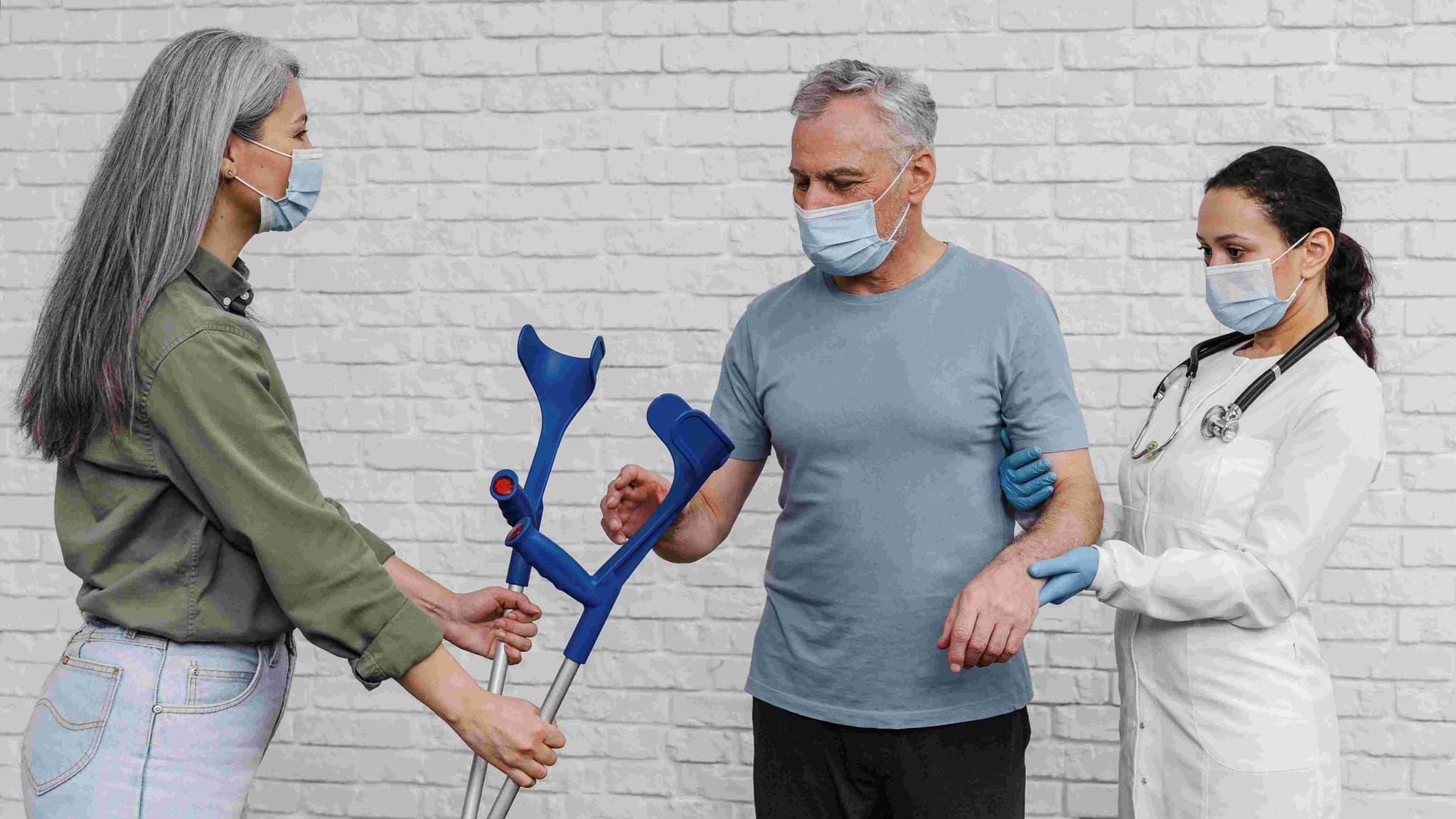
Upper Body Strengthening: If a lower-limb amputation is planned, focusing on arm and core strength to prepare for using crutches or a wheelchair.
Phantom Pain Education: Learning about "Mirror Therapy" and other techniques to manage neurological sensations after surgery.
VTE Prophylaxis: Starting blood-thinning protocols to prevent clots, as amputation involves major blood vessel management.
Pre-Surgery Tests of Amputation
Contrast-Enhanced MRI or CT: To determine the exact "proximal" extent of the tumour and ensure the planned amputation level is high enough to achieve clear margins.
Angiography: To assess the blood flow in the limb and ensure the remaining "stump" will have enough circulation to heal the surgical flaps.
Bone Scan or PET-CT: To rule out any other tumours in the same limb (skip lesions) that might require a higher level of amputation.
Baseline CBC and Nutrition: Checking for anaemia or low protein (albumin) levels, which are critical for healing a large surgical wound.
Cardiovascular Stress Test: To ensure the heart can handle the increased energy demands of walking with a prosthesis.
Life After Amputation (Recovery & Risks)
Wound Healing: Focuses on shaping the residual limb (stump) using elastic bandages or "shrinkers" to reduce swelling and prepare for a prosthesis.
Prosthetic Fitting: A temporary prosthesis may be used within weeks, followed by a permanent, custom-fitted device once swelling has subsided (usually 8–12 weeks).
Physical Therapy: Vital for gait training and strengthening remaining muscles. Walking with an above-knee prosthesis can require 60–100% more energy than natural walking.
Phantom Limb Pain: The feeling of pain or sensation in the missing part of the limb. 2026 treatments include nerve-mapping, specialized medications, and virtual reality therapy.
Activity Rules: You will work with occupational therapists to adapt your home and car to ensure you can return to independence as quickly as possible.
Why Specialized Treatment Is Highly Effective
Definitive Disease Control: Amputation provides the highest possible level of local cancer clearance for tumours that are too large for limb-sparing techniques.
Faster Return to Activity: For some complex sarcomas, a well-performed amputation and modern prosthesis allow a patient to return to walking and daily life faster than a multi-year limb-reconstruction process.
Advanced Bionics: 2026 prosthetic technology includes microprocessors and sensors that allow for a near-natural gait and even the restoration of some "touch" sensations.
TMR Integration: By performing Targeted Muscle Reinnervation during the initial surgery, 2026 surgeons have significantly reduced the incidence of chronic, debilitating phantom pain.
Multidisciplinary 2026 Care: The combination of oncology surgeons, prosthetists, and specialized physical therapists ensures a holistic recovery aimed at "total mobility."
Amputation (Cancer) Cost in India
The cost of Amputation (Cancer) in India is generally affordable compared with many other countries, making India a popular destination for international patients seeking quality medical care. The treatment cost depends on factors such as the hospital, doctor's experience, treatment approach, medical condition, hospital stay, diagnostic tests, medicines, and any additional procedures required. For international patients, the starting cost of Amputation (Cancer) in India is approximately 1800 USD, although the final price may vary based on individual treatment requirements. Patients are advised to obtain a personalized treatment estimate after medical evaluation.