Arm Lift (Brachioplasty)
Arm Lift (Brachioplasty)
An Arm Lift, or brachioplasty, is a surgical procedure used in 2026 to remove excess, sagging skin and fat from the upper arms. Often referred to as correcting "bat wings," this procedure is most common among individuals who have experienced significant weight loss or natural aging where the skin has lost its ability to retract.
When You Should Consider an Arm Lift
This procedure is ideal for those who have achieved a stable weight but are left with redundant skin that does not respond to exercise. Key indications include:
Significant Skin Laxity: Loose, "crepey" skin that hangs from the underside of the upper arm.
Post-Weight Loss: Excess tissue remaining after losing a significant amount of weight.
Stubborn Arm Fat: Localized fat deposits combined with loose skin that create a heavy arm appearance.
Ineffective Toning: When strength training has built muscle, but it remains hidden under sagging tissue.
Personal Comfort: Difficulty finding clothing that fits or feeling self-conscious in short-sleeved or sleeveless attire.
Methods of an Arm Lift
Traditional Brachioplasty: The most common method, involving an incision from the armpit to the elbow to remove significant amounts of skin.
Mini Arm Lift: Utilizes a smaller, crescent-shaped incision hidden in the armpit for patients with minimal sagging.
Extended Brachioplasty: The incision continues from the arm onto the side of the chest to address sagging lateral chest tissue.
Lipo-Brachioplasty: A 2026 hybrid approach using aggressive liposuction first to protect nerves and lymphatics, followed by skin removal.
Non-Surgical Skin Tightening: Radiofrequency or ultrasound treatments for very mild cases (not a substitute for surgery).
How an Arm Lift Is Performed
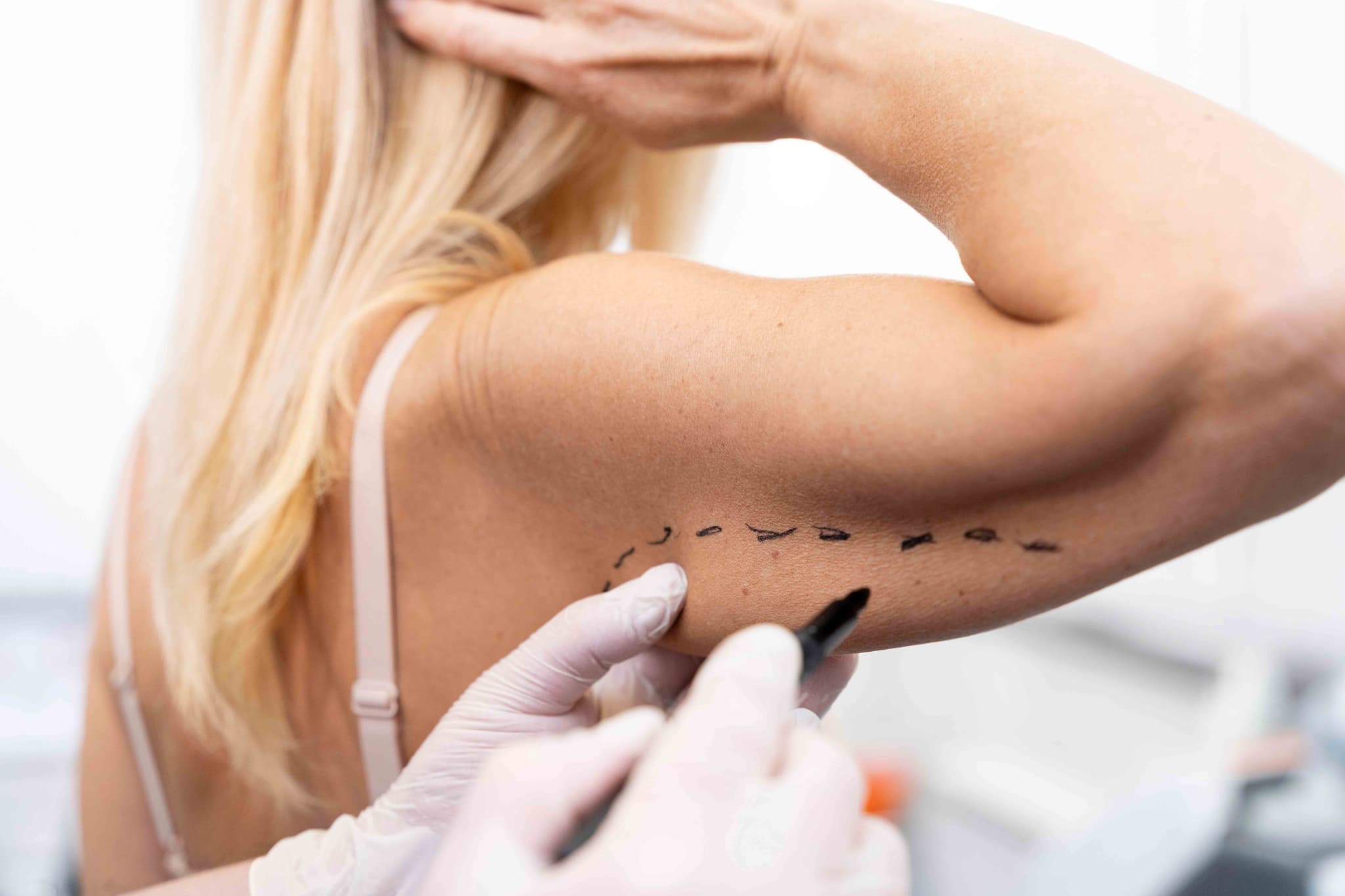
Surgical Access: The surgeon makes an incision along the underside or back of the arm, strategically placed to be as discrete as possible.
Fat Removal: Liposuction is often used first to thin the fat layer and contour the arm.
Tissue Tightening: The underlying supportive tissues are reshaped and tightened with internal sutures.
Skin Excision: The excess skin is trimmed away, and the remaining skin is smoothed over the new, toned contour.
Closure: The incisions are closed with multi-layered sutures, and the arms are wrapped in sterile dressings and compression sleeves.
Pre-Procedure Preparation for Arm Lift
Fasting: Patients must fast for 8–12 hours before the procedure.
Medical Clearances: Standard blood tests and an ECG are required to ensure the patient is fit for anesthesia.
Weight Stability: Ideal candidates should have maintained a stable weight for at least 6 months.
Medication Review: Patients must avoid medications that increase bleeding, such as aspirin or certain herbal supplements, for 2 weeks prior.
Tests Before an Arm Lift
Basic Blood Panel: To evaluate hemoglobin levels, white blood cell count, and clotting ability.
ECG: Performed to monitor heart health during the 2 to 3-hour procedure under general anesthesia.
Physical Assessment: To measure the amount of excess skin versus fat and determine the most effective incision pattern.
Nicotine Test: In 2026, many surgeons require a nicotine-free test to ensure optimal wound healing and minimize scar widening.
Life After an Arm Lift (Recovery)
Hospital Stay: Usually performed as an outpatient procedure; patients return home the same day.
Initial Milestones: Most patients return to light desk work and basic self-care within 1 week.
Compression Therapy: Specialized compression sleeves must be worn 24/7 for the first 3 to 4 weeks to manage swelling.
Activity Restrictions: No heavy lifting (over 5–10 lbs) or reaching over the head for 6 weeks to protect the incisions.
Benefits of an Arm Lift
Toned Appearance: Creates a slender, more defined arm profile that reflects the patient’s actual fitness level.
Improved Mobility: Removes heavy, excess skin that can cause discomfort or chafing during physical activity.
Clothing Confidence: Allows for a wider range of clothing options, including sleeveless tops and well-fitted jackets.
Permanent Skin Removal: Once the excess skin is surgically removed, it does not return, provided a stable weight is maintained.
Arm Lift (Brachioplasty) Cost in India
The cost of Arm Lift (Brachioplasty) in India is generally affordable compared with many other countries, making India a popular destination for international patients seeking quality medical care. The treatment cost depends on factors such as the hospital, doctor's experience, treatment approach, medical condition, hospital stay, diagnostic tests, medicines, and any additional procedures required. For international patients, the starting cost of Arm Lift (Brachioplasty) in India is approximately 1000 USD, although the final price may vary based on individual treatment requirements. Patients are advised to obtain a personalized treatment estimate after medical evaluation.