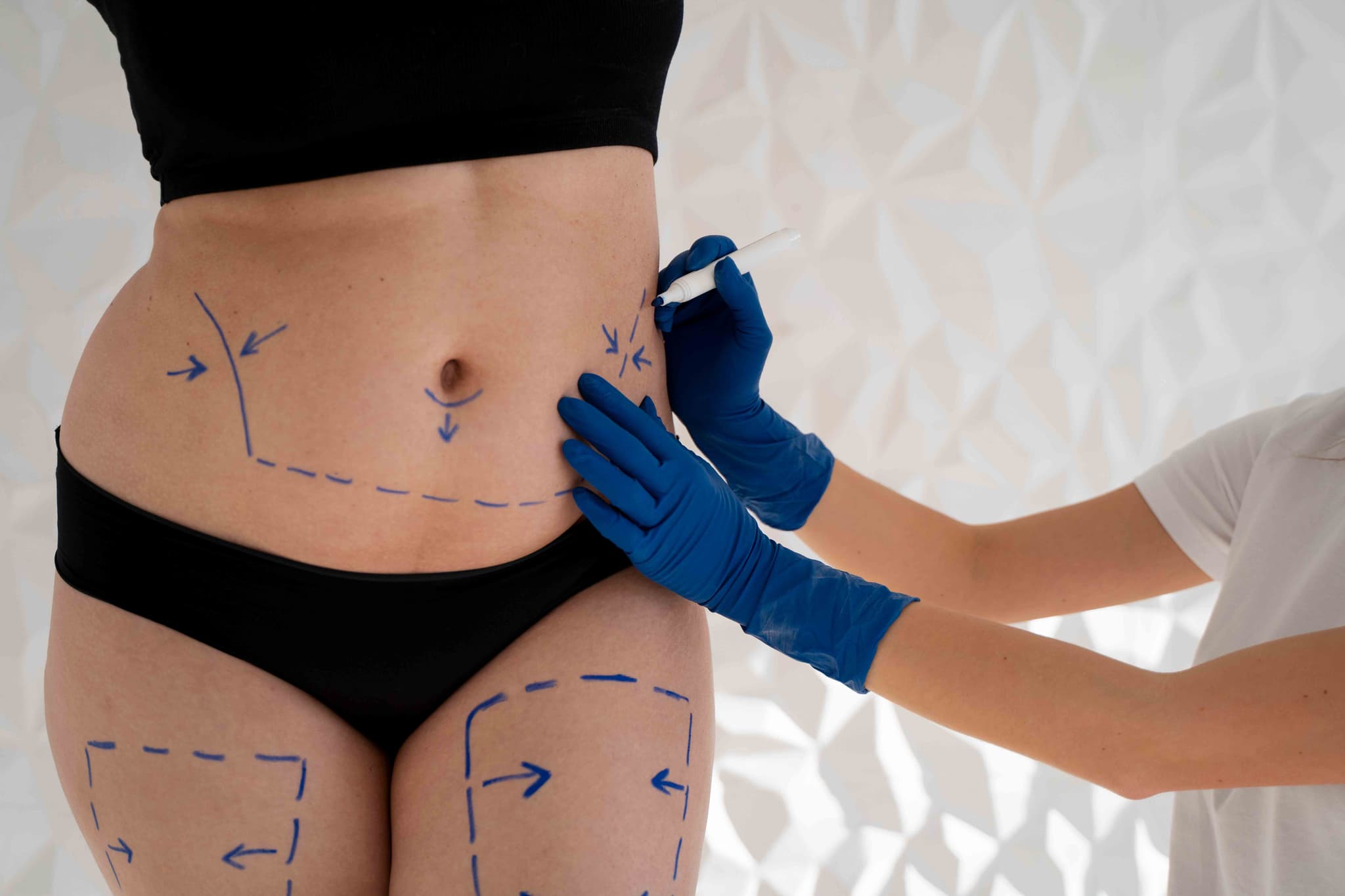
Body Contouring (Post Bariatric)
Body Contouring After Bariatric Surgery
Body Contouring after bariatric surgery is a sequence of reconstructive procedures in 2026 designed to remove massive amounts of redundant skin and residual fat. It is the definitive final step for patients who have lost significant weight (50–100+ lbs), as excess skin can cause persistent hygiene issues, chronic infections, and physical discomfort that exercise alone cannot resolve.
When You Should Consider Body Contouring
This reconstructive journey is recommended for those who have completed their weight-loss phase and are seeking to improve their quality of life. Key indications include:
Redundant Skin Folds: Excessive skin on the abdomen, arms, or thighs that interferes with movement or clothing.
Chronic Skin Irritation: Recurring rashes or infections (intertrigo) within the skin folds.
Functional Limitations: Heavy skin that causes back pain, postural issues, or prevents a return to active fitness.
Stabilized Weight: Successful maintenance of a stable weight for at least 6 to 12 months.
Psychological Closure: A desire to have one's physical appearance reflect their health and weight-loss achievements.
Common Stages of Body Contouring
Phase 1 (The Core): Typically involves a Lower Body Lift or a Fleur-de-lis Abdominoplasty to stabilize the midsection.
Phase 2 (The Upper Body): Focuses on a Breast Lift (Mastopexy) and an Arm Lift (Brachioplasty).
Phase 3 (The Lower Extremities & Face): Includes a Thigh Lift or a Face and Neck Lift to address remaining laxity.
Auto-Augmentation: A 2026 standard where redundant tissue is used to rebuild volume in the breasts or buttocks, avoiding the need for synthetic implants.
Fleur-de-lis Technique: A specialized approach using both vertical and horizontal incisions to address massive skin redundancy in both directions.
How Body Contouring Is Performed
Staged Planning: Due to the extensive nature of these surgeries, procedures are spaced 4–6 months apart to allow the body to recover and ensure patient safety.
Incision & Removal: The surgeon makes precise incisions to remove wide sections of skin and fat, carefully repositioning the remaining tissue for a natural look.
Muscle & Tissue Repair: Weakened muscles (especially in the abdomen) are tightened to provide structural support for the new body shape.
Refined Contouring: Targeted liposuction is used to smooth the transitions between the areas where skin was removed.
Closure: Complex, multi-layered suturing is used to manage tension on the long incisions, and surgical drains are placed to prevent fluid buildup.
Pre-Procedure Preparation for Body Contouring
Nutritional Optimization: Surgeons require comprehensive blood panels to ensure protein, iron, and B12 levels are optimized, as post-bariatric patients often have deficiencies.
Weight Maintenance: Patients must demonstrate a stable "plateau" weight for at least 6 months prior to the first stage.
Mental Health Assessment: In 2026, professional support is often encouraged to help patients adjust to their changing body image.
Smoking/Vaping Cessation: Strict abstinence is mandatory for several weeks before and after to ensure tissue survival and wound healing.
Tests Before Body Contouring
Comprehensive Metabolic Panel: To check electrolyte balance, kidney function, and liver health.
Protein & Micronutrient Testing: To confirm the patient has the nutritional reserves (especially albumin) needed for massive tissue healing.
ECG & Cardiac Clearance: Essential due to the multiple, lengthy surgical sessions required.
Standard Blood Panel: To evaluate hemoglobin and clotting factors to minimize the risk of post-operative anemia.
Life After Body Contouring (Recovery)
High-Intensity Healing: The first week of each stage requires around-the-clock assistance and careful drain management.
Compression Support: Heavy-duty medical compression garments are worn for 6–8 weeks to support the tissues and minimize swelling.
Total Timeline: A full body transformation typically takes 12 to 18 months to complete all stages and see the final settled results.
Scar Management: While scars are extensive and permanent, 2026 protocols include advanced topical treatments and laser therapies to help them fade over time.
Benefits of Body Contouring
Elimination of Skin Issues: Directly resolves chronic rashes, infections, and hygiene struggles associated with skin folds.
Restored Mobility: Dramatically improves the ability to exercise, run, and move without the hindrance of heavy skin.
Permanent Tissue Correction: Once the redundant skin is surgically removed, it does not return if weight remains stable.
Complete Transformation: Provides the physical and emotional "finish line" to a significant weight-loss journey.
Body Contouring (Post Bariatric) Cost in India
The cost of Body Contouring (Post Bariatric) in India is generally affordable compared with many other countries, making India a popular destination for international patients seeking quality medical care. The treatment cost depends on factors such as the hospital, doctor's experience, treatment approach, medical condition, hospital stay, diagnostic tests, medicines, and any additional procedures required. For international patients, the starting cost of Body Contouring (Post Bariatric) in India is approximately 1500 USD, although the final price may vary based on individual treatment requirements. Patients are advised to obtain a personalized treatment estimate after medical evaluation.