Esophageal Manometry
Esophageal Manometry
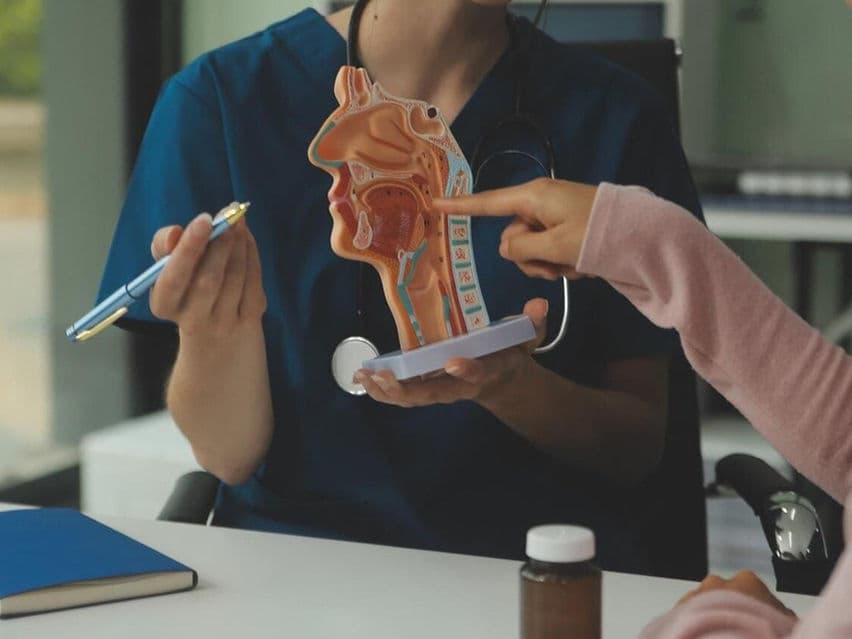
Esophageal Manometry is the definitive diagnostic "gold standard" used to assess the functional health of the esophagus. Unlike an endoscopy, which looks at the physical lining of the tissue, manometry measures the strength, timing, and coordination of the muscle contractions (peristalsis) that move food toward the stomach. By 2026, High-Resolution Manometry (HRM) has become the clinical requirement, utilizing advanced pressure sensors to create a visual "map" of swallowing function and identify disorders that are invisible to traditional imaging.
When You Should Consider Esophageal Manometry
Difficulty Swallowing (Dysphagia): When you feel food or liquid getting "stuck" in your chest despite having a normal-looking endoscopy.
Non-Cardiac Chest Pain: Investigating episodes of chest pain that mimic a heart attack but have been cleared by a cardiologist; these are often caused by esophageal spasms.
Chronic Heartburn (GERD) Evaluation: Determining if poor muscle function is the underlying cause of persistent acid reflux.
Pre-Surgical Planning: A mandatory step before anti-reflux surgeries (such as Nissen Fundoplication) to ensure the esophagus is strong enough to handle a new valve.
Regurgitation: Experiencing the effortless return of undigested food or liquid into the throat or mouth.
Suspected Achalasia: Diagnosing a condition where the valve at the bottom of the esophagus fails to open, causing food to sit in the esophagus.
Conditions That Require Specialized Care
Achalasia (Types I, II, and III): Requiring precise classification to determine if the patient needs a balloon dilation, Botox injection, or a POEM procedure.
Distal Esophageal Spasm: A condition characterized by "uncoordinated" muscle waves that cause intense, cramping pain.
Jackhammer Esophagus: Hyper-contractile waves that are excessively strong and often require specialized medication to relax the muscle.
Scleroderma: An autoimmune condition that can lead to a complete loss of esophageal muscle strength, requiring unique nutritional management.
Ineffective Esophageal Motility (IEM): Often seen in chronic reflux patients where the "push" of the esophagus is too weak to clear acid.
How Esophageal Manometry Is Performed
Nasal Numbing: A local anesthetic gel or spray is applied to the nasal passage to make the insertion of the catheter as comfortable as possible.
Catheter Insertion: A thin, flexible, pressure-sensitive tube is gently guided through the nose, down the throat, and into the stomach while the patient is upright or lying down.
Patient Participation: Unlike other GI tests, the patient remains fully awake and alert, as they must follow specific instructions to perform "test swallows."
High-Resolution Mapping: The catheter's sensors record thousands of data points, creating a 3D color-coded map of the pressure changes in the esophagus.
The Swallowing Series: The patient takes roughly 10 small sips of water and sometimes eats a small amount of solid food (like a cracker) to see how the muscles react to different textures.
Duration: The actual recording phase usually takes only 15 to 30 minutes, after which the tube is quickly and easily removed.
Innovations in Motility Testing
Chicago Classification 4.0 IntegrationAutomated software that uses the latest international standards to instantly categorize the patient's swallowing patterns into specific disease types.
Impedance-Manometry (MII-HRM)Combining pressure sensors with electrical "impedance" to see exactly how fast liquid moves through the esophagus in relation to the muscle contractions.
Solid-State High-Resolution SensorsModern catheters utilize solid-state micro-sensors that provide much higher data accuracy and faster response times than older water-perfused systems.
Provocative Testing (Rapid Drink Challenge)Asking the patient to drink a large amount of water quickly to "stress test" the esophagus, which can reveal subtle issues that single sips might miss.
Artificial Intelligence Pattern RecognitionAI algorithms that help the gastroenterologist distinguish between rare motility disorders by comparing the patient's topographical map to thousands of known cases.
Wireless pH-Manometry HybridIn specialized cases, the test can be performed in conjunction with wireless pH monitoring to see exactly how muscle failure leads to acid reflux episodes.
Pre-Procedure Preparation
Fasting (NPO): Patients must refrain from eating or drinking for at least 6 hours before the test to ensure the esophagus is empty and to prevent nausea.
Medication Pause: Certain drugs that affect muscle "tension," such as calcium channel blockers, nitrates, or heavy sedatives, may need to be stopped 24–48 hours prior.
Nasal Check: Informing the clinician if you have a history of a deviated septum, nasal surgery, or frequent nosebleeds.
Comfort Planning: While the test is not painful, it can feel "unusual"; deep breathing and following the technician’s instructions help the catheter pass easily.
Clothing: Wearing comfortable, loose-fitting clothing, as you will be sitting or lying in various positions during the measurement.
Diagnostic and Safety Monitoring
Upper Esophageal Sphincter (UES) Check: Monitoring the valve at the top of the throat to ensure it coordinates with the start of a swallow.
Lower Esophageal Sphincter (LES) Relaxation: The most critical metric, checking if the valve at the stomach opens completely to allow food to pass.
Integrated Relaxation Pressure (IRP): A mathematical calculation used to determine if there is a functional obstruction at the gastroesophageal junction.
Peristaltic Integrity: Measuring the "completeness" of the muscle wave to ensure there are no "gaps" in the push.
Why This Treatment Is Highly Effective
Identifies "Invisible" Issues: Manometry finds functional problems that are completely missed by X-rays, CT scans, and endoscopies.
Guarantees Surgical Success: By confirming the esophagus works well before surgery, it prevents the complication of "permanent dysphagia" after an anti-reflux wrap.
Directs Targeted Therapy: Tells the doctor exactly whether you need a muscle-relaxing drug, a surgical cut (myotomy), or simple lifestyle changes.
Standardized Results: Using the global Chicago Classification ensures that your results are interpreted the same way by specialists anywhere in the world.
Zero Sedation Risk: Because no anesthesia is required, there are no "recovery" risks associated with heart or lung depression.
Recovery and Aftercare
Immediate Activity: The catheter is removed in seconds, and most patients can drive themselves home and return to work immediately.
Dietary Return: You can resume your normal diet as soon as the test is over.
Minor Side Effects: A mild sore throat or a slightly "runny" nose for an hour or two is common and resolves on its own.
Throat Soothing: Drinking cool liquids or using a throat lozenge can help if there is any lingering irritation from the catheter.
Result Reporting: Because of the complex data mapping, a full report by a motility specialist typically takes 3 to 5 business days.
Life After Esophageal Manometry
A definitive diagnosis for symptoms that may have been dismissed as "anxiety" or "standard reflux."
The start of a highly targeted treatment plan that addresses the actual cause of swallowing pain.
Greater confidence when moving forward with major surgeries like a Fundoplication or a Heller Myotomy.
Understanding the physical limits of your digestive system, allowing for smarter food and lifestyle choices.
Resolution of chronic, frightening chest pain episodes through proper esophageal management.