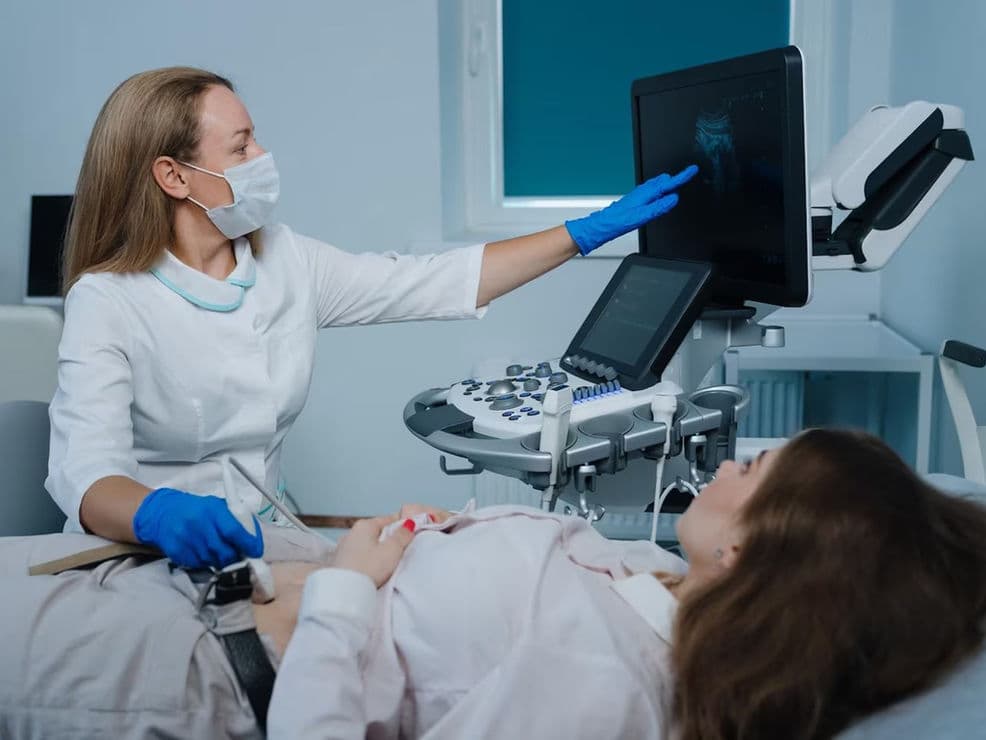
FibroScan (Transient Elastography)
FibroScan (Transient Elastography)
FibroScan, clinically known as Transient Elastography, is the premier non-invasive diagnostic tool used to assess liver health. It specifically measures liver stiffness (fibrosis) and fat accumulation (steatosis) without the need for needles or incisions. By 2026, FibroScan has become the primary global standard for monitoring chronic liver conditions, offering a safe, painless, and rapid alternative to the traditional liver biopsy for the majority of patients.
When You Should Consider a FibroScan
Fatty Liver Monitoring (MASLD/MASH): Assessing the severity of fat buildup and identifying early inflammation in patients with metabolic concerns.
Chronic Hepatitis B or C: Regularly tracking the stage of liver scarring to determine the effectiveness of antiviral medications.
Alcohol-Related Liver Disease: Screening for early-stage cirrhosis in individuals with a history of heavy alcohol consumption.
Unexplained Liver Enzyme Elevation: Investigating the physical state of the liver when blood tests show abnormal results.
Type 2 Diabetes or Obesity: Screening high-risk individuals for "silent" liver scarring, which often accompanies metabolic syndrome.
Autoimmune Liver Conditions: Monitoring long-term stability in patients with Primary Biliary Cholangitis (PBC) or Autoimmune Hepatitis.
Understanding the Key Measurements
Liver Stiffness Measurement (LSM): Reported in kilopascals (kPa). This "E-score" indicates how stiff the liver is. A higher number typically correlates with more advanced scarring (fibrosis).
CAP Score (Controlled Attenuation Parameter): Measured in decibels per meter (dB/m), this score quantifies the percentage of the liver affected by fatty change (steatosis).
Fibrosis Staging (F0–F4): Results are categorized from F0 (no scarring) to F4 (cirrhosis), providing a clear roadmap for treatment.
Steatosis Staging (S1–S3): Categorizes fat accumulation from mild (S1) to severe (S3), helping guide dietary and lifestyle interventions.
How a FibroScan Is Performed
Positioning: The patient lies flat on their back with the right arm raised behind the head to expose the rib cage area.
Probe Placement: A technician applies a water-based gel and places a specialized ultrasound-like probe on the skin over the liver (between the ribs).
Shear Wave Delivery: The probe sends a painless, low-frequency vibration (shear wave) through the liver tissue.
Velocity Measurement: The device uses ultrasound to track how fast that vibration travels. Because vibrations travel faster through stiff tissue, the speed accurately reflects the degree of scarring.
Multiple Samples: The technician typically takes 10 valid measurements to ensure a statistically accurate median score.
Immediate Results: The software processes the data instantly, allowing the patient to receive their liver health report before leaving the office.
Innovations in Liver Elastography
XL Probe StandardizationThe routine use of specialized "extra-large" probes that allow for accurate liver measurements in patients with a higher Body Mass Index (BMI).
AI-Enhanced CAP ScoringNext-generation software that uses Artificial Intelligence to filter out "noise" from the signal, providing a more precise fat measurement than early versions.
Spleen Stiffness Measurement (SSM)Newer FibroScan models can also measure the stiffness of the spleen, which is a critical indicator of "portal hypertension" in advanced liver disease.
Integrated Health DashboardsSoftware that automatically compares today’s scan with previous years' data, generating a visual "trend line" of the patient's liver recovery or progression.
Smart-Point NavigationSensors in the probe that guide the technician to the exact anatomical spot for the highest-quality signal, reducing the time required for the test.
Portable Handheld SolutionsHigh-accuracy, mobile FibroScan units that allow for liver screening in community clinics and rural health centers.
Pre-Procedure Preparation
Fasting (NPO): Patients must refrain from all food and liquids (including water) for at least 3 hours prior to the test. Food intake can increase blood flow to the liver, which may artificially inflate the stiffness score.
Clothing Choice: Wearing loose-fitting clothing that allows easy access to the right side of the rib cage.
Medical History: Informing the technician if you have active implants (like a pacemaker) or if you are pregnant, as these may be contraindications in some centers.
Rest: Staying relaxed; since the test is non-invasive, no sedation or specialized pre-medication is required.
Diagnostic and Safety Monitoring
Inflammation Awareness: Doctors review the results alongside blood tests, as active liver inflammation (high ALT) can sometimes make a liver look "stiffer" than it truly is.
Ascites Evaluation: Checking for significant abdominal fluid, which can prevent the shear wave from traveling effectively and may require an alternative test.
IQR/Med Ratio: A technical quality check performed by the machine to ensure the 10 samples taken were consistent and reliable.
Non-Radiological Safety: Unlike CT scans, FibroScan uses no ionizing radiation, making it safe for repeated use over a lifetime.
Why This Treatment Is Highly Effective
Painless and Non-Invasive: Provides deep-tissue data without the risks of bleeding or infection associated with a biopsy.
Speed of Care: The entire procedure takes only 5–10 minutes, with results available immediately for discussion with the specialist.
High Volume Sampling: A FibroScan samples a volume of liver tissue 100 times larger than a needle biopsy, providing a more representative view of the organ.
Repeatability: Because it is safe and low-cost, it can be performed every 6–12 months to track disease improvement or catch issues early.
Diagnostic Precision: Excellent at distinguishing between "no cirrhosis" and "advanced cirrhosis," which is critical for long-term health planning.
Recovery and Aftercare
No Downtime: Since no sedation or needles are used, patients can drive themselves home and return to work or exercise immediately.
Result Interpretation: A gastroenterologist or hepatologist will review the scores to determine if lifestyle changes or medications are needed.
Dietary Guidance: If a high CAP score (fat) is found, the results serve as a baseline for starting a specialized nutritional or weight-management plan.
Follow-up Interval: For stable patients, a repeat scan is typically recommended once a year to ensure liver health is maintained.
Life After a FibroScan
Gaining a clear, numerical understanding of your liver health, replacing "guesswork" with data.
Motivation to maintain lifestyle changes by seeing real-time reductions in liver fat or stiffness over subsequent scans.
Early detection of potential issues, allowing for interventions long before physical symptoms appear.
Avoidance of invasive procedures, reducing the overall stress and cost of chronic disease management.
Empowerment through knowledge, enabling more informed conversations with your healthcare team.