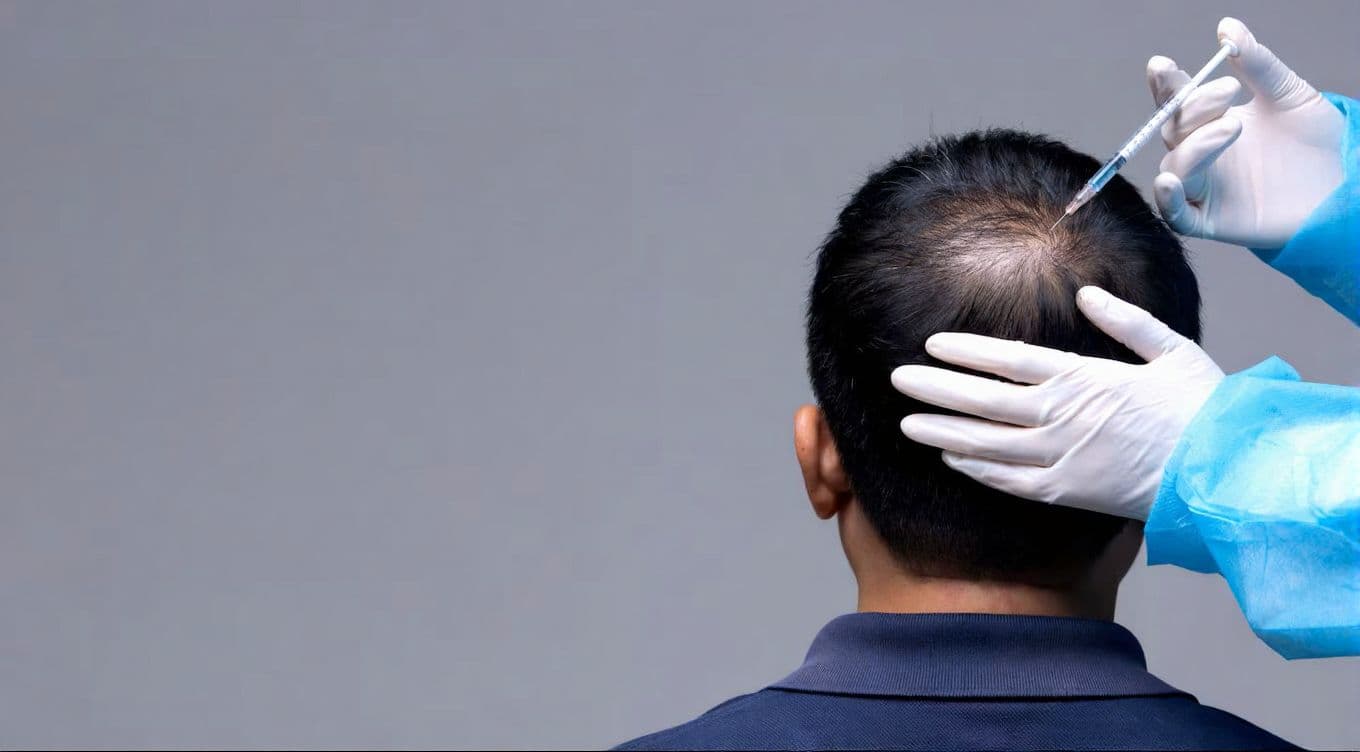
Hair Transplant Surgery
Hair Transplantation
Hair Transplantation is a permanent surgical solution in 2026 for hair loss, involving the relocation of individual hair follicles from a "donor site"—typically the back or sides of the head—to thinning or bald areas. Modern procedures focus on high-density implantation and robotic assistance to create seamless, natural-looking results that are indistinguishable from original hair.
When You Should Consider a Hair Transplant
This procedure is ideal for individuals looking to address permanent hair loss rather than temporary thinning. Key indications include:
Male Pattern Baldness: Receding hairlines or thinning at the crown (vertex).
Female Pattern Hair Loss: General thinning across the top or part line of the scalp.
Traction Alopecia: Hair loss caused by long-term tension from tight hairstyles.
Scarring Alopecia: Filling in hairless areas caused by previous injuries, burns, or surgeries.
Eyebrow or Beard Thinning: Using transplant techniques to increase density in facial hair.
Methods of Hair Transplantation
FUE (Follicular Unit Extraction): The most popular modern method, where individual follicles are extracted one by one, leaving virtually invisible micro-scars.
FUT (Follicular Unit Transplantation): The "strip method," where a small section of skin is removed and divided into grafts; ideal for patients requiring a very high volume of hair.
DHI (Direct Hair Implantation): Follicles are loaded into a specialized "Choi Pen" and implanted directly, allowing for high precision and control over hair angle.
Robotic Hair Restoration: Utilizing AI-driven systems (like ARTAS) to identify and extract the healthiest follicles with mathematical precision.
Hybrid Procedures: Combining surgical transplantation with PRP (Platelet-Rich Plasma) therapy to stimulate faster healing and graft growth.
How a Hair Transplant Is Performed
Donor Area Preparation: The hair in the donor zone is usually trimmed, and the area is numbed with local anesthesia.
Extraction: Depending on the method (FUE or FUT), follicles are carefully harvested. In 2026, advanced storage solutions keep these follicles "alive" and healthy outside the body.
Recipient Site Design: The surgeon meticulously plans the angle, depth, and direction of each graft to mimic a natural growth pattern.
Implantation: The harvested grafts are placed into the thinning areas. A single session can involve anywhere from 1,000 to 4,000+ grafts.
Review and Cleaning: The scalp is cleaned, and specialized dressings or cooling packs may be applied to minimize initial discomfort.
Pre-Procedure Preparation
Medical Review: A blood test is typically required to check for underlying conditions or vitamin deficiencies that could affect hair health.
Scalp Assessment: A "trichoscopy" (magnified scalp exam) is performed to determine donor hair density and follicle quality.
Medication Review: Patients should avoid blood thinners and certain herbal supplements for 10–14 days prior to surgery.
Hair Care: Patients are often asked to avoid cutting their hair too short before the procedure so the surgeon can better assess natural growth directions.
Tests Before a Hair Transplant
Basic Blood Panel: To evaluate overall health, iron levels (ferritin), and clotting function.
Scalp Biopsy (Optional): Conducted if the surgeon suspects an inflammatory hair loss condition that might reject a transplant.
Digital Hair Mapping: To calculate the exact number of grafts needed and predict the final density.
Allergy Testing: Ensuring the patient is not sensitive to the local anesthetics used during the long session.
Life After a Hair Transplant (Recovery)
Immediate Care: The scalp will be tender with tiny scabs. Sleeping with the head elevated at a 45-degree angle for 3 nights is critical to prevent facial swelling.
The "Shock Loss" Phase: Between weeks 2 and 4, the transplanted hair shafts will fall out. This is a normal part of the process; the living follicles remain healthy beneath the skin.
New Growth: Sprouting usually begins around month 3 or 4, with visible improvements continuing through the first year.
Final Result: The full aesthetic outcome is achieved between 12 and 15 months. Once grown, the hair can be cut, styled, and dyed normally.
Benefits of a Hair Transplant
Permanent Solution: Transplanted follicles are genetically resistant to balding and will continue to grow for a lifetime.
Natural Appearance: Modern techniques ensure that the hairline and density look completely authentic.
Minimal Downtime: With FUE and robotic methods, most patients return to work and social activities within 7 days.
Boosted Confidence: Effectively restores a more youthful appearance and eliminates the need for temporary hair-loss concealers or pieces.