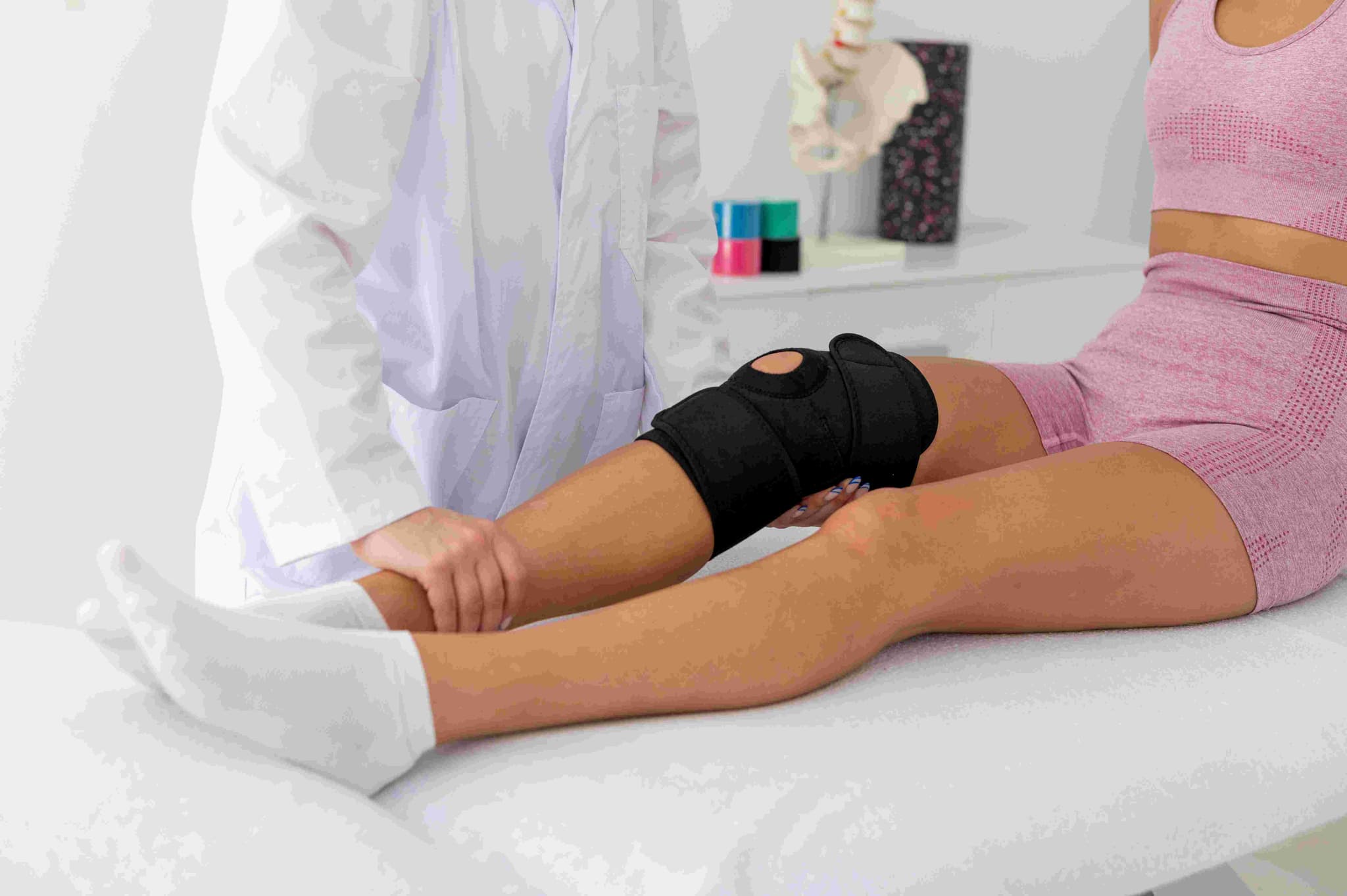
Partial Knee Replacement
Partial Knee Replacement (PKR)
A Partial Knee Replacement (PKR), also known as Unicompartmental Knee Arthroplasty, is a surgical procedure where only the damaged part of the knee is replaced with metal and plastic components. Unlike a Total Knee Replacement, this surgery preserves the healthy bone, cartilage, and ligaments in the rest of the knee.
When You Should Consider Partial Knee Replacement
Arthritis that is strictly confined to only one "compartment" of the knee (typically the inner side).
Persistent knee pain that has not responded to non-surgical treatments like physical therapy or injections.
Maintenance of intact and healthy ligaments, specifically the ACL and PCL.
Desire for a more "natural" feeling joint and a faster return to daily activities.
Absence of inflammatory conditions like Rheumatoid arthritis or significant joint stiffness.
Methods of Partial Knee Replacement
Medial Unicompartmental Arthroplasty: Replacing the inner compartment of the knee, which is the most common PKR site.
Lateral Unicompartmental Arthroplasty: Replacing the outer compartment of the knee joint.
Patellofemoral Arthroplasty: Replacing only the "track" under the kneecap (patella).
Robotic-Assisted PKR: Utilizing robotic guidance to ensure the precise removal of bone and accurate implant alignment.
Cemented Fixation: Securing the metal femoral and tibial components using high-strength bone cement.
How Partial Knee Replacement Is Performed
Bone Preparation: The surgeon removes a thin layer of damaged bone and cartilage only from the diseased area of the femur and tibia.
Implant Fitting: A small metal cap is placed on the end of the thigh bone, and a small metal tray is fixed to the shin bone.
Spacer Insertion: A medical-grade plastic (polyethylene) insert is snapped into the tibial tray to create a smooth gliding surface.
Ligament Preservation: The surgeon carefully works around the natural ligaments to ensure they remain functional and intact.
Closure: The small incision is closed with sutures or surgical glue, typically resulting in less scarring than a total replacement.
Pre-Procedure Preparation
Comprehensive evaluation using weight-bearing X-rays and sometimes MRI to confirm the other two compartments are healthy.
Discussion regarding the potential "conversion" to a Total Knee Replacement if more widespread damage is found during surgery.
Fasting (NPO) and preoperative medical clearance for either spinal or general anesthesia.
Identifying the specific compartment (medial, lateral, or patellofemoral) targeted for resurfacing.
Tests Before Partial Knee Replacement
Weight-Bearing X-rays: The primary imaging used to assess the location and severity of arthritis.
MRI Scan: Used to ensure the ligaments (ACL/PCL) are healthy and that the non-diseased compartments have intact cartilage.
Physical Range-of-Motion Test: To check for significant knee stiffness that might make a total replacement a better option.
Blood Panels: Routine testing to check for infection risk and general surgical readiness.
Life After Partial Knee Replacement
Often performed as an outpatient procedure, allowing patients to return home the same day.
Mobilization begins quickly, with patients often walking with a cane or walker within 2–4 hours.
Recovery is typically faster than TKR, with most patients regaining a full range of motion in 2–4 weeks.
Physical therapy is essential but generally less intense due to the preservation of natural knee structures.
Long-term monitoring is required to ensure arthritis does not develop in the untreated sections of the knee.
Benefits of Partial Knee Replacement
The knee often has a more "natural" feel because the original ligaments are preserved.
Generally results in a better "bend" (flexion) and range of motion compared to a total replacement.
Smaller incisions lead to significantly less post-operative pain, swelling, and blood loss.
Modern implants are highly durable, often lasting 15 to 20 years in appropriately selected patients.
Partial Knee Replacement Cost in India
The cost of Partial Knee Replacement in India is generally affordable compared with many other countries, making India a popular destination for international patients seeking quality medical care. The treatment cost depends on factors such as the hospital, doctor's experience, treatment approach, medical condition, hospital stay, diagnostic tests, medicines, and any additional procedures required. For international patients, the starting cost of Partial Knee Replacement in India is approximately 1500 USD, although the final price may vary based on individual treatment requirements. Patients are advised to obtain a personalized treatment estimate after medical evaluation.