Pneumonectomy (Cancer)
Pneumonectomy
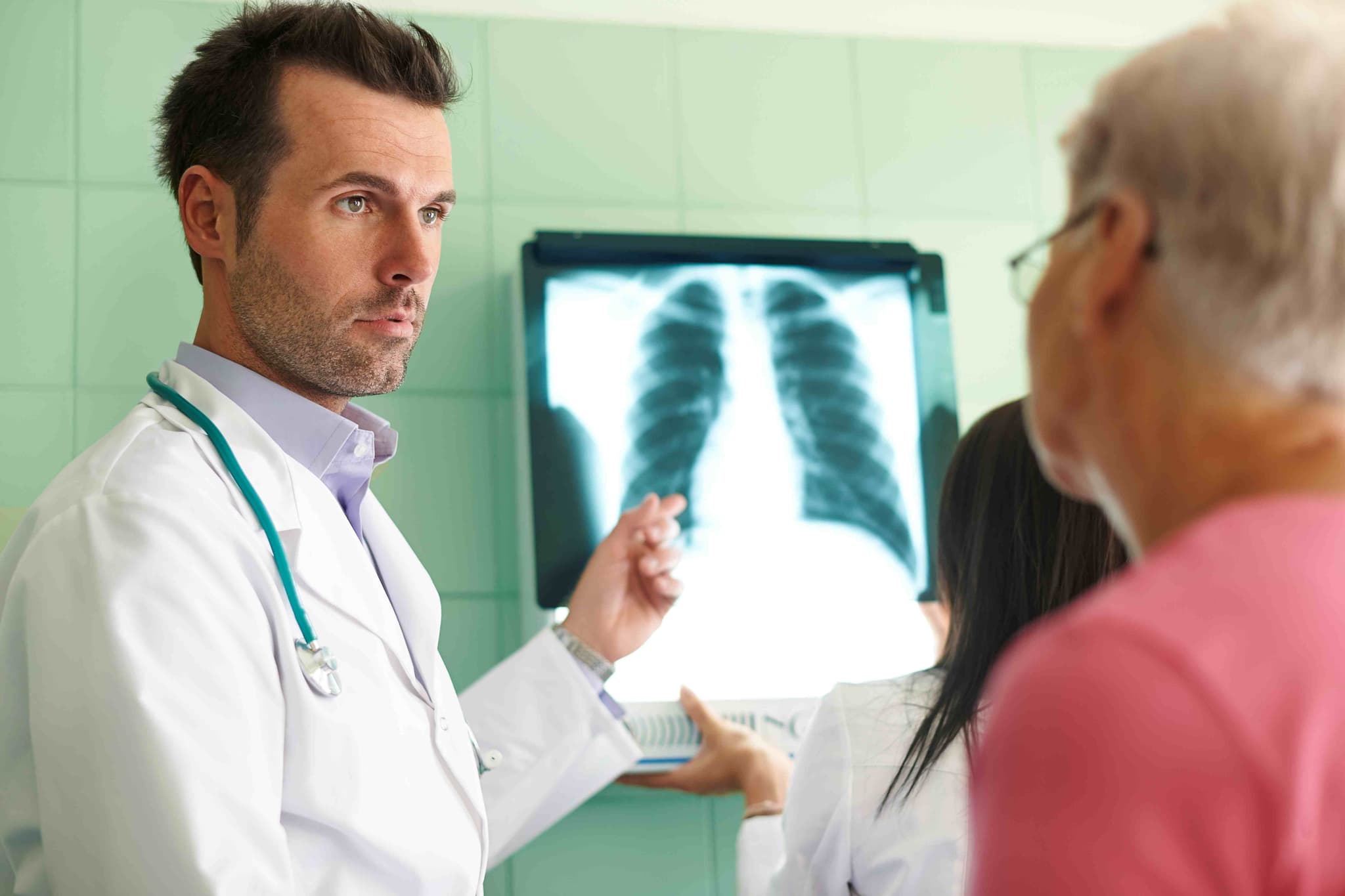
A pneumonectomy is the surgical removal of an entire lung. It is a major thoracic operation reserved for cases where a tumor is so centrally located or extensive that removing only a portion of the lung (like a lobectomy) would leave cancer cells behind. While it significantly impacts breathing capacity, many patients successfully adapt to living with one healthy lung through specialized pulmonary rehabilitation.
When You Should Consider a Pneumonectomy
Central Tumors: When the cancer is located in the main bronchus (airway) or involves the main pulmonary artery or vein.
Multi-Lobar Involvement: When the tumor crosses the anatomical fissures and involves all lobes of a single lung.
Locally Advanced NSCLC: For Stage II or III Non-Small Cell Lung Cancer that cannot be cleared by a "sleeve" resection.
Malignant Mesothelioma: An Extrapleural Pneumonectomy may be performed to remove the lung, the lining (pleura), part of the diaphragm, and the heart sac (pericardium).
Recurrent Cancer: When cancer returns in a lung that has previously undergone a partial removal (Completion Pneumonectomy).
Types of Pneumonectomy
Traditional Pneumonectomy: Removal of the entire left or right lung.
Extrapleural Pneumonectomy (EPP): A radical version often used for mesothelioma, removing the lung along with surrounding membranes and a portion of the diaphragm.
Completion Pneumonectomy: The removal of the remaining part of a lung after a previous surgery has already been performed.
Carinal Pneumonectomy: A highly complex procedure where the lung is removed along with the "fork" of the windpipe (carina), followed by reconstruction of the airway.
How Is Performed
One-Lung Ventilation: Performed under general anesthesia using a special tube that allows the surgeon to deflate the lung being removed while the other lung is safely ventilated.
Thoracotomy Access: Usually requires an incision around the side to the back (posterolateral thoracotomy) to provide the best view of the major heart and lung vessels.
Vascular Ligation: The main pulmonary artery and pulmonary veins are carefully tied off and divided using surgical staplers.
Bronchial Stump Closure: The main airway is cut close to the windpipe and sealed. Surgeons often reinforce this "stump" with a flap of nearby tissue to prevent air leaks.
The "Empty" Cavity: Unlike other lung surgeries, a chest tube is often not used for suction afterward. The empty space naturally fills with fluid over time, which eventually turns into a gel-like substance to prevent the heart from shifting too far.
Pre-Procedure Preparation
Extensive PFTs: Comprehensive Pulmonary Function Tests to calculate exactly how much breathing capacity you will have left with just one lung.
Cardiac Stress Testing: Because removing a lung puts extra pressure on the heart, an Echocardiogram or Stress Test is mandatory to ensure the heart is strong enough.
Nutritional Optimization: A high-protein, calorie-dense diet is started weeks before to ensure the body can handle the significant healing required.
Pre-habilitation: Specialized exercises to strengthen the "good" lung and the muscles used for breathing before the surgery begins.
Smoking Cessation: Total cessation is required at least 4–8 weeks prior to reduce the high risk of post-operative pneumonia.
Tests Before Pneumonectomy
PET-CT and Brain MRI: To confirm that the cancer has not spread outside of the lung being removed.
EBUS / Mediastinoscopy: Biopsies of the lymph nodes in the center of the chest to ensure the cancer is still "resectable."
V/Q Scan: A quantitative Ventilation/Perfusion scan to determine the percentage of lung function contributed by each lung.
Baseline ABG: An Arterial Blood Gas test to measure the current oxygen and carbon dioxide levels in your blood.
Blood Type & Cross-match: Due to the risk of bleeding from major vessels, blood is held in reserve for the procedure.
Life After a Pneumonectomy (Recovery & Risks)
ICU Stay: Most patients spend the first 24–48 hours in the Surgical Intensive Care Unit for close monitoring of heart rhythm and oxygen levels.
Hospital Timeline: Expect a stay of 7 to 10 days. Recovery at home typically takes 2 to 4 months.
Atrial Fibrillation (AFib): Common (up to 30%) as the heart adjusts to new pressures in the chest; it is usually temporary and managed with medication.
Shortness of Breath: You will likely feel breathless with heavy exertion, but most patients can perform daily activities without supplemental oxygen.
Post-Pneumonectomy Syndrome: A rare late complication where the heart shifts too far into the empty space; modern techniques use tissue flaps or fillers to prevent this.
Why Specialized Treatment Is Highly Effective
Definitive Local Control: It is the most aggressive way to ensure a "clean margin" when a tumor is large or centrally located.
Lung Adaptation: The remaining lung undergoes "compensatory hyperinflation," expanding slightly and becoming more efficient at gas exchange over time.
Integrated 2026 Care: Combined with modern neoadjuvant immunotherapy, a pneumonectomy can provide long-term survival for cases previously considered inoperable.
Pulmonary Rehab: Supervised rehabilitation programs significantly improve "one-lung" quality of life, helping patients return to travel and hobbies.
Pneumonectomy (Cancer) Cost in India
The cost of Pneumonectomy (Cancer) in India is generally affordable compared with many other countries, making India a popular destination for international patients seeking quality medical care. The treatment cost depends on factors such as the hospital, doctor's experience, treatment approach, medical condition, hospital stay, diagnostic tests, medicines, and any additional procedures required. For international patients, the starting cost of Pneumonectomy (Cancer) in India is approximately 3000 USD, although the final price may vary based on individual treatment requirements. Patients are advised to obtain a personalized treatment estimate after medical evaluation.