Thigh Lift Surgery
Thigh Lift (Thighplasty)
A Thigh Lift, or thighplasty, is a surgical procedure in 2026 designed to remove excess skin and fat from the thigh area. It is a highly effective solution for individuals dealing with skin laxity following significant weight loss or natural aging, where the skin has lost the elasticity required to respond to exercise alone.
When You Should Consider a Thigh Lift
This procedure is ideal for patients seeking a smoother, firmer lower body contour. Key indications include:
Significant Skin Sagging: "Crepey" or loose skin that hangs from the inner or outer thighs.
Post-Weight Loss: Redundant tissue remaining after major weight reduction that causes physical discomfort or chafing.
Lower Body Disproportion: Thighs that appear out of proportion with the rest of the toned lower body.
Persistent Fat & Skin: Localized fat deposits combined with loose skin that create "ripples" or folds.
Limited Mobility: Excess skin that interferes with walking, exercise, or finding comfortable clothing.
Methods of a Thigh Lift
Inner (Medial) Thigh Lift: The most common technique, focusing on the upper-inner thigh with incisions hidden in the groin crease.
Vertical Thigh Lift: Addresses significant skin laxity extending toward the knee; requires a vertical incision along the inner thigh.
Outer (Lateral) Thigh Lift: Targets the outside of the thighs and "saddlebag" areas, often extending the incision toward the hip.
Spiral Thigh Lift: A comprehensive 360-degree approach for patients with massive weight loss, addressing the front, back, inner, and outer thigh.
Lipo-Thighplasty: A 2026 standard combining thorough liposuction with skin excision to ensure a more sculpted and defined result.
How a Thigh Lift Is Performed
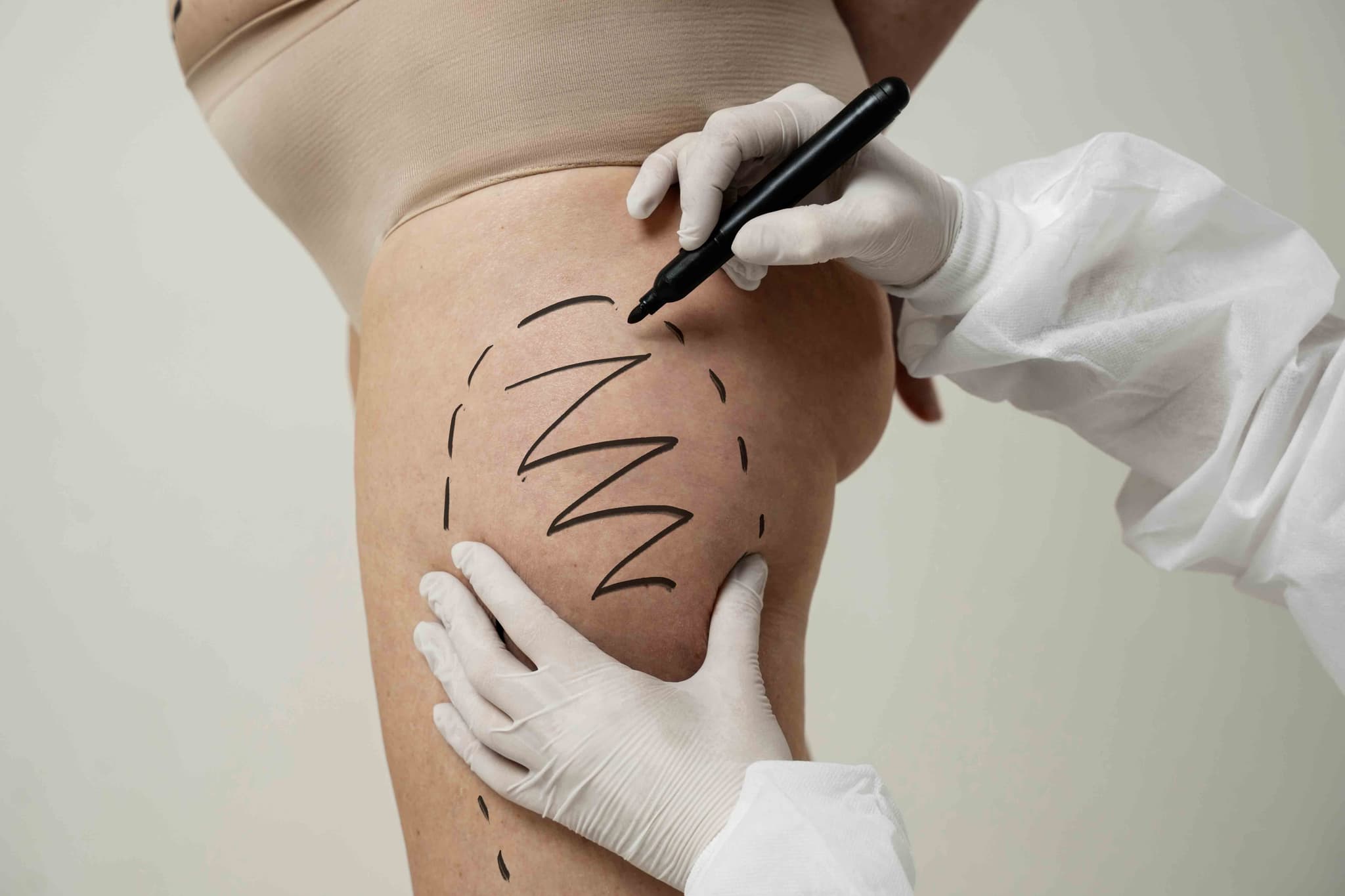
Surgical Access: Incisions are strategically placed in the groin fold or along the inner thigh, depending on the volume of tissue to be removed.
Fat Contouring: Liposuction is utilized to thin the fatty layer and shape the underlying contours of the leg.
Tissue Tightening: A wedge of skin and fat is removed, and the remaining tissue is pulled upward and secured to deep supportive structures.
Skin Smoothing: The skin is redraped over the new contour to eliminate sagging and dimples.
Closure: The surgeon uses multi-layered suturing to minimize tension on the skin, and compression bandages are applied immediately.
Pre-Procedure Preparation
Fasting: Patients must fast for 8–12 hours before the 2 to 4-hour surgery.
Medical Clearances: Standard blood tests and an ECG are required to ensure the patient is fit for general anesthesia.
Weight Stability: Candidates should be at a stable weight for at least 6 months to ensure long-lasting results.
Hygiene Protocol: Patients may be prescribed an antibacterial wash to use for several days prior, especially around the groin area.
Tests Before a Thigh Lift
Basic Blood Panel: To evaluate hemoglobin levels and ensure optimal clotting function.
ECG: Performed to monitor heart health during the procedure.
Physical Assessment: To determine the degree of skin laxity and calculate the necessary incision length for effective correction.
Nicotine Screening: Because blood flow is critical for healing in the thigh area, many 2026 surgeons require a nicotine-free test.
Life After a Thigh Lift (Recovery)
Hospital Stay: Usually performed as an outpatient procedure, though a 1-night stay may be recommended for more extensive "Spiral" lifts.
Initial Milestones: Mobility is limited for the first week; patients must walk slightly hunched to avoid tension on groin incisions.
Compression Therapy: Medical-grade compression garments must be worn 24/7 for the first 3 to 6 weeks to support the tissue.
Activity Timeline: Most return to light desk work by week 3; full physical activity and high-impact leg workouts are typically resumed by week 8.
Benefits of a Thigh Lift
Smoother Silhouette: Effectively eliminates the "rippled" appearance of loose skin for a firmer look.
Reduced Chafing: Removing excess inner-thigh skin significantly reduces skin irritation and discomfort during movement.
Better Clothing Fit: Allows for a more comfortable and confident fit in swimwear, shorts, and fitted trousers.
Permanent Tissue Removal: Once the excess skin is surgically removed, the results are permanent as long as the patient maintains a stable weight.
Thigh Lift Surgery Cost in India
The cost of Thigh Lift Surgery in India is generally affordable compared with many other countries, making India a popular destination for international patients seeking quality medical care. The treatment cost depends on factors such as the hospital, doctor's experience, treatment approach, medical condition, hospital stay, diagnostic tests, medicines, and any additional procedures required. For international patients, the starting cost of Thigh Lift Surgery in India is approximately 1000 USD, although the final price may vary based on individual treatment requirements. Patients are advised to obtain a personalized treatment estimate after medical evaluation.