Percutaneous Nephrolithotomy (PCNL)
Percutaneous Nephrolithotomy (PCNL)
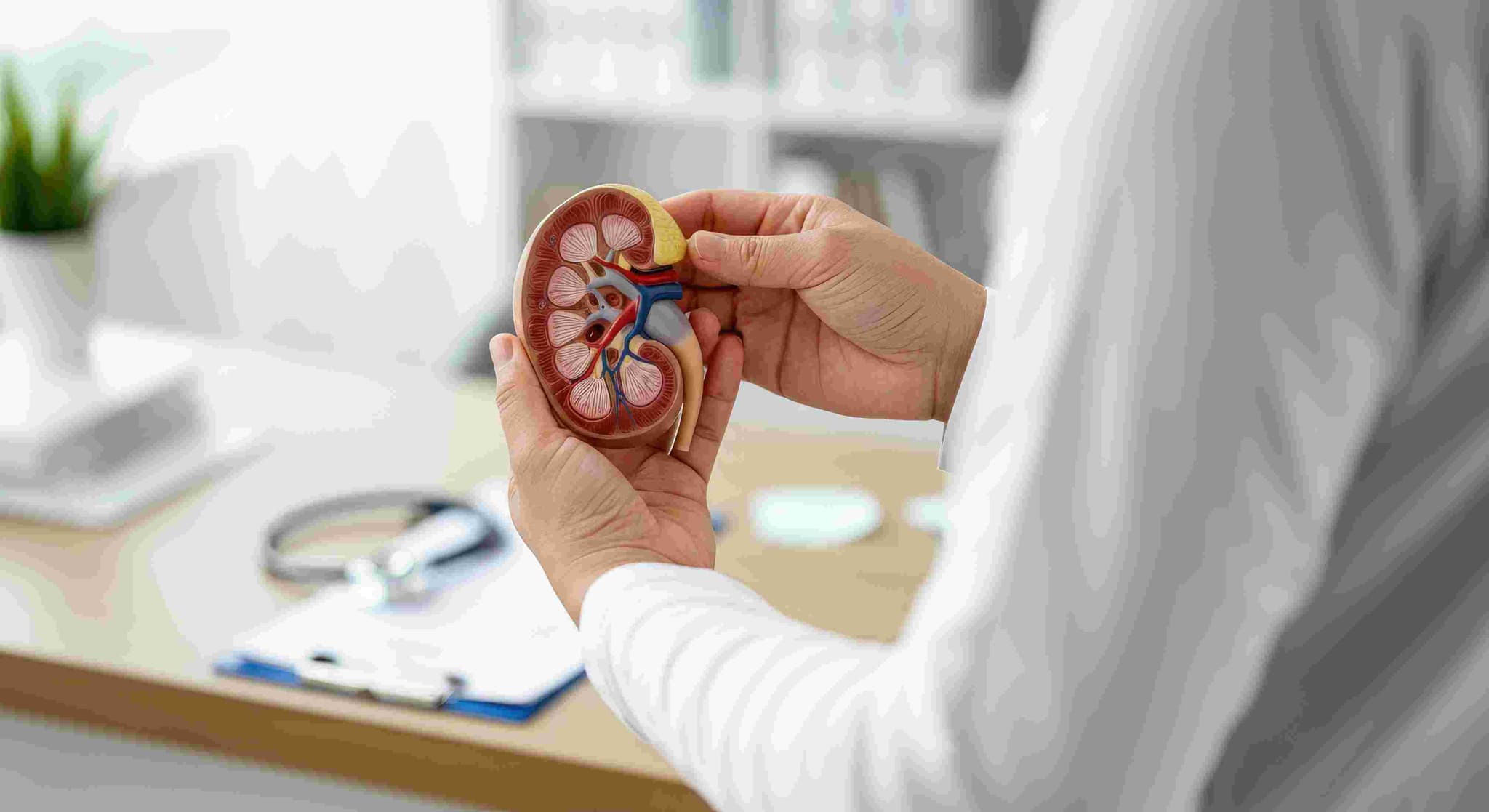
Percutaneous Nephrolithotomy (PCNL) is a minimally invasive "keyhole" surgery specifically used to remove large kidney stones—usually those over 2 cm—that cannot be passed naturally or treated effectively with standard shockwave therapy. This procedure allows surgeons to reach the kidney through a tiny incision in the back, providing a direct route to extract complex or "staghorn" stones that would otherwise require major open surgery.
When You Should Consider PCNL
Large Kidney Stones: Specifically those larger than 2 cm in diameter which are too substantial for laser ureteroscopy or shockwave lithotripsy.
Staghorn Calculi: Complex stones that branch out to fill the various drainage channels (calyces) of the kidney.
Failed Previous Treatments: When other non-invasive methods have failed to break or clear the stone.
Stones in Diverticula: When a stone is trapped in a small outpouching of the kidney that is difficult to access through the ureter.
Cystine or Stones of High Density: Very hard stones that are resistant to being broken by external sound waves.
How It Is Performed
Anesthesia: The surgery is performed under general anesthesia, ensuring you are completely asleep and comfortable throughout the procedure.
Positioning: You are typically placed in a prone (face-down) or supine (face-up) position to allow the surgeon precise access to the kidney through the flank.
The Incision: A small, "keyhole" incision (approximately 1 cm) is made in your flank area (the side of your back).
Access & Fragmentation:
A protective sleeve is inserted through the incision directly into the kidney's collecting system.
A nephroscope (a specialized thin camera) is passed through the sleeve to locate the stone under high magnification.
If the stone is too large to remove whole, the surgeon uses a lithotripter (a laser, ultrasound, or pneumatic device) to fragment the stone into smaller, manageable pieces.Extraction: The fragments are then physically removed from the kidney using specialized graspers or suction.
Drainage: To ensure the kidney heals properly, a nephrostomy tube (draining to an external bag) or an internal ureteral stent is often left in place temporarily.
Pre-Procedure Preparation
Medical Evaluation: Comprehensive blood and urine tests to rule out active infection and assess kidney function.
Advanced Mapping: A high-resolution CT scan or intravenous pyelogram (IVP) to map the exact 3D location of the stones and the surrounding anatomy.
Antibiotic Protocol: A preventative dose of antibiotics is administered to minimize the risk of post-surgical infection.
Fasting: Adhering to "nothing by mouth" instructions after midnight on the night before your surgery.
Medication Audit: You will be asked to stop taking blood thinners (like aspirin, warfarin, or clopidogrel) several days before the procedure to prevent bleeding.
Tests Before PCNL
Urine Culture: Essential to confirm the urine is sterile before entering the kidney with surgical instruments.
CT Stone Protocol: A specialized scan to determine the "Hounsfield units" (density) of the stone, which helps the surgeon choose the right fragmentation tool.
Complete Blood Count (CBC): To establish a baseline for your red and white blood cells.
ECG: A standard heart check to confirm cardiovascular stability for a procedure that typically lasts 1 to 4 hours.
Life After PCNL
Hospital Stay: Most patients stay in the hospital for 1 to 2 days for close monitoring of kidney drainage and comfort levels.
Tube Management: If a nephrostomy tube was used, it is typically removed before you leave the hospital or at a quick follow-up visit a few days later.
Initial Symptoms: It is normal to see small amounts of blood in your urine (hematuria) or feel moderate soreness at the incision site for 1–2 weeks.
Activity Restrictions: Avoid strenuous activity, heavy exercise, or lifting anything heavier than 4 kg (approx. 9 lbs) for at least 2 weeks.
Hydration: Drinking plenty of fluids is critical to help flush out any remaining tiny microscopic stone fragments.
Follow-Up: A check-up is scheduled for 4 to 6 weeks after surgery, often including an X-ray or ultrasound to confirm the kidney is stone-free and functioning correctly.
Why Specialized Treatment Is Highly Effective
Highest Clearance Rate: PCNL offers the highest "stone-free" rate for large and complex stones compared to any other surgical or non-surgical method.
Direct Extraction: Because stones are physically removed rather than just broken, there is a lower risk of fragments getting stuck in the ureter later.
Minimally Invasive: Despite treating large stones, the "keyhole" approach means less pain, smaller scars, and a much faster recovery than traditional open kidney surgery.
One-Step Solution: Even the largest staghorn stones can often be cleared in a single surgical session.
Protects Kidney Health: Rapidly clearing an obstructing stone prevents long-term pressure damage (hydronephrosis) and reduces the risk of recurrent kidney infections.
Percutaneous Nephrolithotomy (PCNL) Cost in India
The cost of Percutaneous Nephrolithotomy (PCNL) in India is generally affordable compared with many other countries, making India a popular destination for international patients seeking quality medical care. The treatment cost depends on factors such as the hospital, doctor's experience, treatment approach, medical condition, hospital stay, diagnostic tests, medicines, and any additional procedures required. For international patients, the starting cost of Percutaneous Nephrolithotomy (PCNL) in India is approximately 800 USD, although the final price may vary based on individual treatment requirements. Patients are advised to obtain a personalized treatment estimate after medical evaluation.