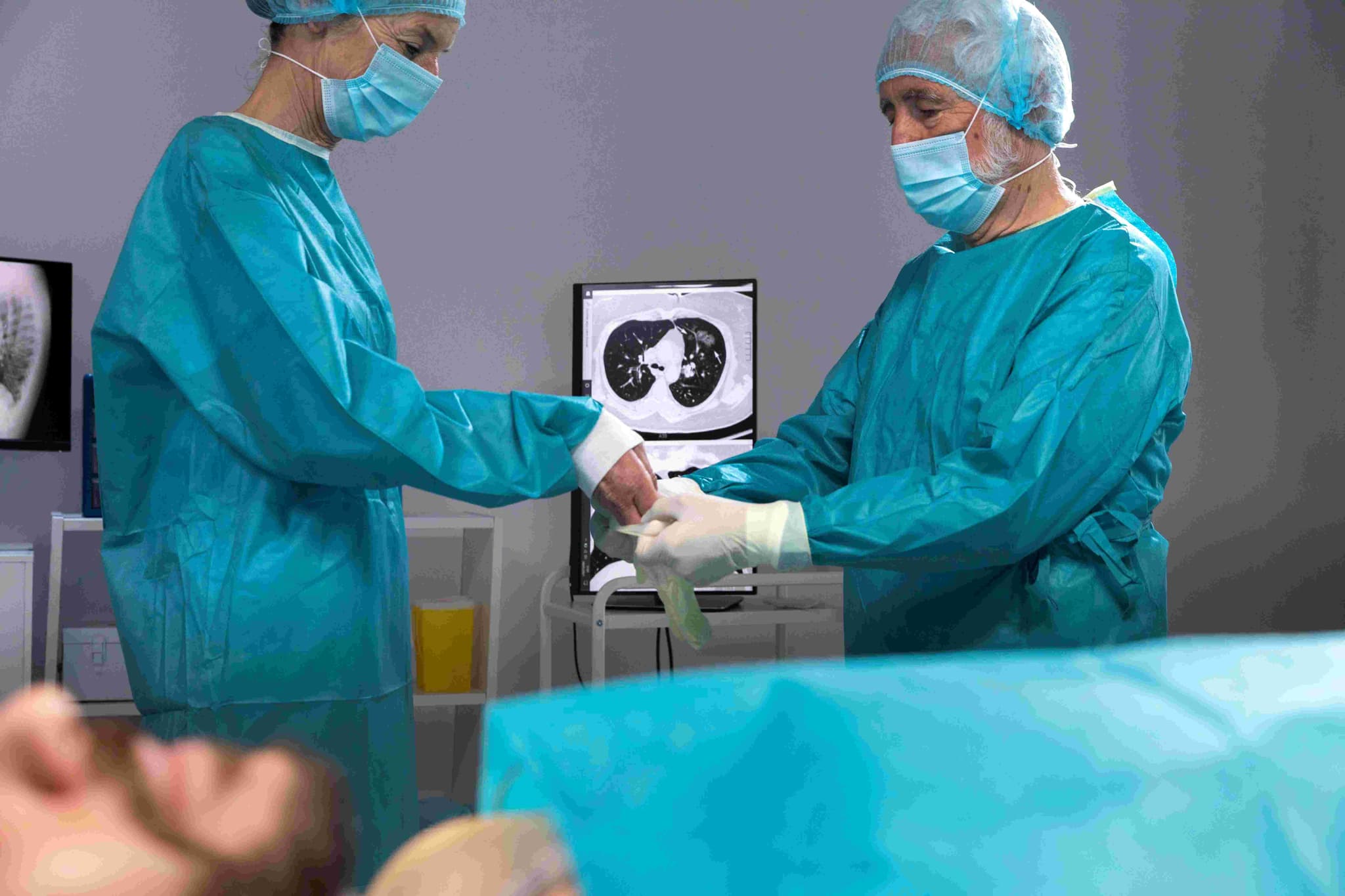
Mini-PCNL / Micro-PCNL
Mini-PCNL and Micro-PCNL (Urology)
Mini-PCNL is a "small-access" surgery used for stones between 1 cm and 2.5 cm. Micro-PCNL is an "all-in-one" needle surgery, usually reserved for stones around 1 cm to 1.5 cm.
When You Should Consider Mini-PCNL or Micro-PCNL
Stone Size: Ideal for stones between 1 cm and 2.5 cm that are too large for ESWL but don't require standard PCNL.
Stone Hardness: When stones are too dense to be broken from outside the body by shockwaves.
Lower Pole Stones: Particularly effective for stones located in the bottom part of the kidney which are difficult to clear otherwise.
Failed Previous Treatments: When non-invasive methods like ESWL have failed to fragment the stone.
Patient Preference: For those seeking a higher "stone-free rate" with minimal scarring and a faster return to daily activities.
Methods of Mini and Micro-PCNL
Mini-PCNL Access: A tiny incision (about 5 mm to 8 mm) is made in the flank area to allow for a thin telescope.
Micro-PCNL Access: Uses a specialized 1.5 mm needle—about the thickness of an injection needle—to enter the kidney without a traditional incision.
Laser Fragmentation: Utilization of high-power Holmium or Thulium Lasers to break stones into smaller pieces or fine dust.
Vortex Suction: A mechanism used in Mini-PCNL to automatically pull fragments out through the sheath using saline irrigation.
Dusting Technique: In Micro-PCNL, the laser turns the stone into a fine powder that washes out naturally through urine.
How the Procedure Is Performed
Anesthesia: Both procedures are performed under General Anesthesia to ensure the patient is completely asleep and still.
Imaging Guidance: Surgeons use Live X-ray (Fluoroscopy) and Ultrasound simultaneously to guide the needle or scope to the stone.
Nephroscopy: A thin Mini-Nephroscope or a tiny Micro-Lens camera is inserted directly into the kidney to visualize the stone.
Fragmentation: The laser fiber is passed through the scope or needle to precisely target and break the stone.
Stent Placement: In Mini-PCNL, a small internal JJ stent may be left for 1–2 weeks to ensure proper kidney drainage.
Pre-Procedure Preparation
Fasting: Maintaining a "nil per oral" status for at least 8 hours before the procedure for anesthesia safety.
Medication Review: Suspending blood thinners several days in advance to minimize the risk of bleeding during the kidney puncture.
Antibiotic Prophylaxis: Receiving a dose of intravenous antibiotics just before the procedure to prevent urinary tract infections.
Hydration: Ensuring adequate fluid intake in the days leading up to the surgery to maintain good kidney function.
Clearance: Obtaining medical clearance, especially for patients with pre-existing heart or lung conditions.
Pre-Surgery Tests
NCCT KUB: A non-contrast CT scan to determine the exact size, location, and hardness (Hounsfield units) of the stone.
Urine Culture: To confirm the urine is sterile; surgery is postponed if an active infection is detected.
Coagulation Profile: Blood tests (PT/INR) to ensure the blood clots normally before making the kidney access.
Renal Function Test: Checking Creatinine and Urea levels to assess how well the kidneys are functioning.
ECG and Chest X-ray: Standard pre-anesthetic tests to ensure heart and lung fitness for general anesthesia.
Life After Mini and Micro-PCNL
Hospital Stay: Typically 24 hours for Mini-PCNL, while Micro-PCNL is often performed as a daycare (same-day) procedure.
Hydration Therapy: Drinking 3–4 litres of water daily is essential to flush out laser-dusted particles and fragments.
Physical Activity: Most patients return to light desk work within 3–4 days but should avoid heavy lifting for 2 weeks.
Urine Appearance: Expect light-pink or blood-tinged urine for 1–2 days as the kidney heals.
Stent Removal: If a JJ stent was placed, a minor follow-up procedure is required to remove it after 7–14 days.
Benefits of Mini and Micro-PCNL
High Stone-Free Rate: Provides a much higher chance of complete stone removal in a single session compared to ESWL.
Minimal Pain: Small access points lead to significantly less post-operative pain and a reduced need for painkillers.
Cosmetic Results: The incisions are so small (or non-existent in Micro-PCNL) that they often require no stitches and leave no visible scars.
Safety: Lower risk of bleeding and kidney damage compared to traditional, large-tract PCNL.
Fast Recovery: Allows for a quicker discharge from the hospital and a rapid return to a normal lifestyle.
Mini-PCNL / Micro-PCNL Cost in India
The cost of Mini-PCNL / Micro-PCNL in India is generally affordable compared with many other countries, making India a popular destination for international patients seeking quality medical care. The treatment cost depends on factors such as the hospital, doctor's experience, treatment approach, medical condition, hospital stay, diagnostic tests, medicines, and any additional procedures required. For international patients, the starting cost of Mini-PCNL / Micro-PCNL in India is approximately 1000 USD, although the final price may vary based on individual treatment requirements. Patients are advised to obtain a personalized treatment estimate after medical evaluation.