Squint Correction Surgery
Squint Correction Surgery (Strabismus Surgery)
Squint correction surgery, or strabismus surgery, is a specialized procedure performed to align the eyes by adjusting the tension of the external eye muscles. This procedure can be performed on both children and adults to improve eye coordination, eliminate double vision, and enhance the physical appearance of the eyes.
When You Should Consider Squint Correction
Misaligned Eyes: When one or both eyes turn inward (esotropia), outward (exotropia), upward, or downward.
Double Vision (Diplopia): If the misalignment causes you to see two images of a single object, affecting your daily activities.
Loss of Depth Perception: When the eyes do not work together (binocular vision), making it difficult to judge distances accurately.
Eye Strain and Headaches: When significant effort is required to keep the eyes focused and aligned, leading to chronic discomfort.
Aesthetic Concerns: To improve the symmetry and appearance of the eyes, which can significantly boost self-confidence.
How Is Performed
Anesthesia: The surgery is typically an outpatient procedure performed under general anesthesia for children and either general or local anesthesia for adults.
Accessing the Muscles: The surgeon makes a small incision in the conjunctiva—the clear membrane covering the white of the eye—to reach the six muscles that control movement. The eyeball itself is never removed or cut into.
Muscle Adjustment:
Recession (Weakening): The muscle is detached and reattached further back on the eye to reduce its pull and "relax" the eye's position.
Resection (Strengthening): A small section of the muscle is removed to make it shorter and "tighter," increasing its pull to bring the eye into alignment.Adjustable Sutures (Adults): In some adult cases, temporary knots are used. Once the patient is awake, the alignment is checked and fine-tuned for the best result before being permanently tied.
Closure: The incisions are closed with absorbable stitches that dissolve on their own over 2–4 weeks.
Duration: The procedure typically takes between 30 and 60 minutes.
Pre-Procedure Preparation
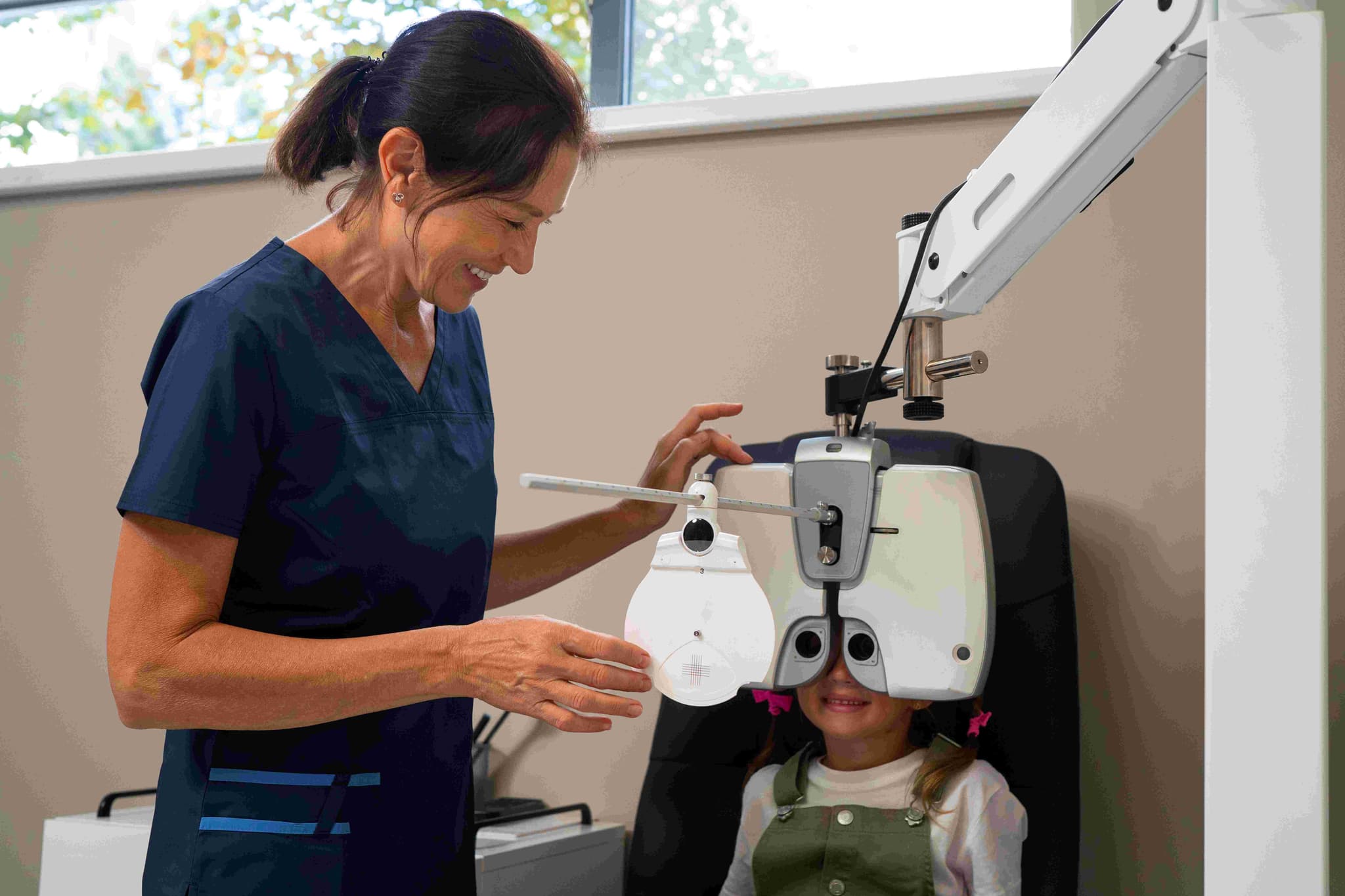
Orthoptic Assessment: A detailed measurement of the squint in all directions of gaze to plan exactly which muscles need adjustment.
Refraction Test: Checking if glasses can partially or fully correct the squint before proceeding with surgery.
Binocular Vision Testing: Assessing how well the brain is currently using both eyes together.
Fasting: Following "nothing by mouth" instructions if general anesthesia is planned for the procedure.
Transportation: Arranging for a ride home, as your vision and coordination may be temporarily affected by the anesthesia and eye adjustments.
Tests Before Squint Surgery
Prism Cover Test: Using specialized prisms to measure the degree of deviation (the "angle" of the squint).
Motility Exam: Checking the range of motion for all six muscles in each eye to identify any overactive or underactive muscles.
Stereopsis Test: Measuring your level of depth perception to determine the potential for functional improvement.
Slit-Lamp Examination: Ensuring the surface of the eye is healthy and free of inflammation before making the conjunctival incisions.
Life After Squint Surgery
Initial Symptoms: The white of the eye will look very red (similar to a bruise) for 2–3 weeks. The eyes may feel "gritty" or sore for the first few days.
Vision Adjustment: Double vision is common for the first few days as the brain adapts to the new eye position.
Medication: You must use prescribed antibiotic and steroid eye drops for 2 to 4 weeks to prevent infection and swelling.
Activity Restrictions: No swimming for 4 weeks and no contact sports for 2–4 weeks. Most patients return to work or school within one week.
Follow-up: Regular appointments with an orthoptist or surgeon are necessary to monitor the final alignment as the muscles heal.
Why Specialized Treatment Is Highly Effective
Restores Binocularity: By aligning the eyes, the procedure helps the brain use both eyes together, significantly improving depth perception.
Eliminates Diplopia: Successfully resolves the misalignment that causes confusing and disorienting double vision.
Customized Precision: The use of adjustable sutures in adults allows for "real-time" fine-tuning of the eye position for a more accurate outcome.
Reduces Fatigue: Eases the constant muscular effort previously required to keep the eyes focused, reducing strain and headaches.
High Success Rates: Modern surgical techniques provide predictable results, often achieving excellent alignment in a single session.
Squint Correction Surgery Cost in India
The cost of Squint Correction Surgery in India is generally affordable compared with many other countries, making India a popular destination for international patients seeking quality medical care. The treatment cost depends on factors such as the hospital, doctor's experience, treatment approach, medical condition, hospital stay, diagnostic tests, medicines, and any additional procedures required. For international patients, the starting cost of Squint Correction Surgery in India is approximately 300 USD, although the final price may vary based on individual treatment requirements. Patients are advised to obtain a personalized treatment estimate after medical evaluation.