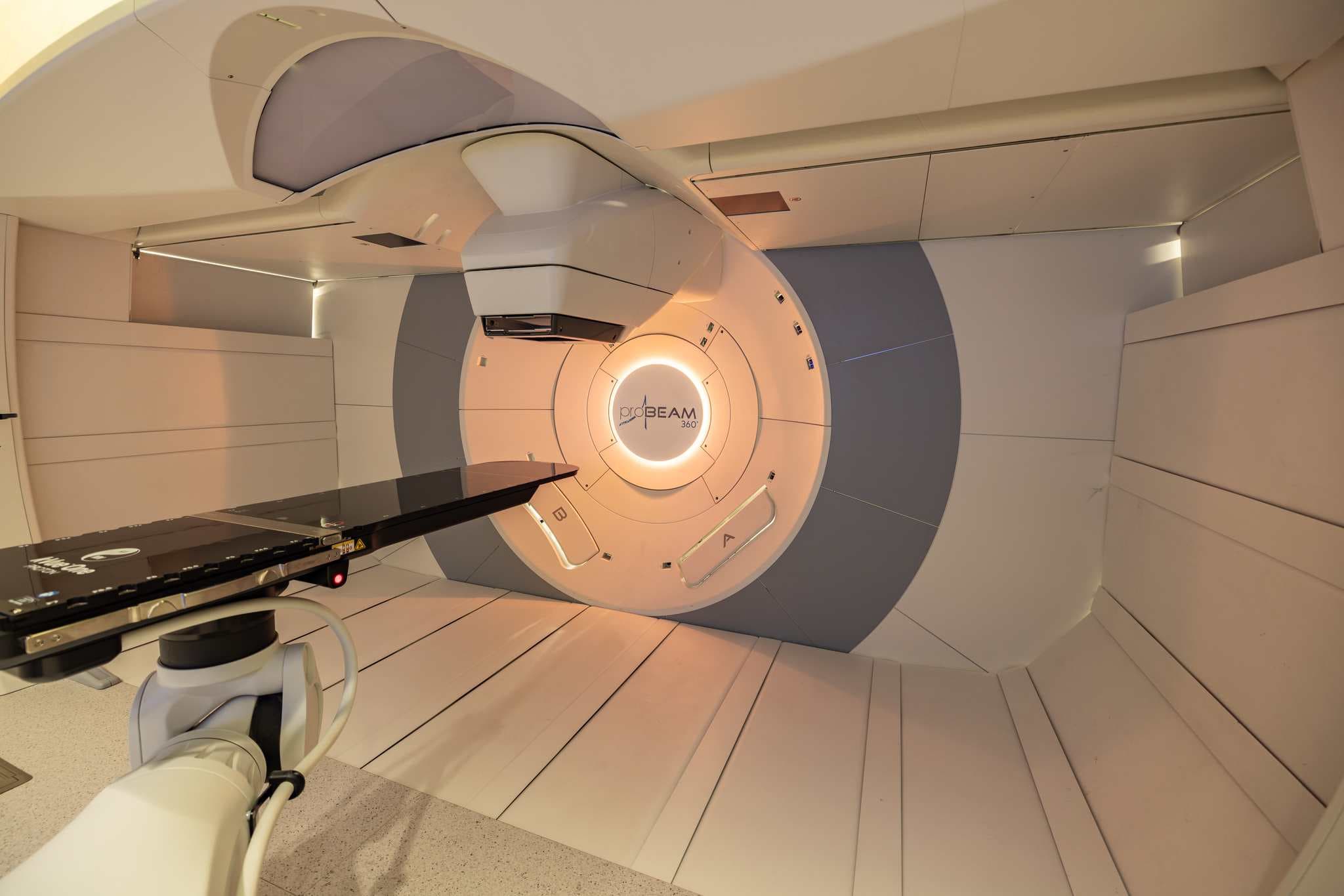
Proton Therapy
Proton Therapy: Targeted Particle Radiation Technology
Proton Therapy represents the absolute pinnacle of localized radiation oncology. Unlike conventional radiation therapy that utilizes high-energy X-rays, Proton Therapy harnesses positively charged heavy subatomic particles (protons) to deliver targeted radiation directly into tumor tissues. By virtue of unique particle physics properties, this technology allows radiation oncologists to escalate therapeutic doses to tumors while virtually eliminating radiation exposure to surrounding healthy structures.
How the Technology Works: The Bragg Peak Principle
The primary technological advantage of protons over X-rays rests on their distinct energy deposition profile, governed by the Bragg Peak:
Controlled Depth-Dose Energy Release: As protons travel through body tissue, they lose minimal energy along their entry path. Once they reach a specific depth determined by their speed, they rapidly release the vast majority of their destructive energy directly within the tumor boundary.
Zero Exit Dose Protection: Unlike conventional X-ray beams, which pass entirely through the body and expose healthy tissues behind the target to "exit doses," protons come to a complete stop after releasing their maximum energy.
3D Pencil-Beam Scanning (PBS): Modern proton platforms utilize pencil-beam scanning technology to "paint" radiation layer-by-layer across the three-dimensional contour of the tumor with millimeter accuracy.
Key Clinical Applications in Advanced Oncology
Proton Therapy is the global gold standard for complex malignancies situated adjacent to critical, non-irradiable organs:
Pediatric Oncology: Essential for childhood brain, spinal, and pelvic cancers. Sparing developing tissues dramatically reduces risks of secondary cancers, growth stuntedness, and cognitive deficits later in life.
Neurological & Central Nervous System Tumors: Ideal for chordomas, chondrosarcomas, meningiomas, and acoustic neuromas located near the brainstem, optic nerves, or spinal cord.
Head & Neck / Base of Skull Cancers: Treats tumors near the eyes, optic pathways, swallowing mechanics, and major arteries while reducing severe dry mouth and mucosal tissue damage.
Gastrointestinal & Thoracic Malignancies: Delivers high-dose radiation to liver (HCC), esophageal, lung, and prostate cancers while safeguarding adjacent heart, bowel, and lung tissues.
Engineering Advantages, Cost & Patient Benefits
By drastically minimizing total body radiation exposure (integral dose), Proton Therapy yields exceptional clinical and quality-of-life benefits:
Cost Efficiency: While a full course of Proton Therapy costs between $120,000 and $200,000+ in the United States and Western Europe, international patients can access the technology at JCI-accredited proton centers in India for approximately $25,000 to $45,000 (delivering up to 75% to 80% cost savings).
Drastic Side Effect Reduction: Patients experience significantly lower rates of treatment toxicity—such as nausea, severe fatigue, heart damage, or tissue fibrosis.
Feasibility of Re-Irradiation: Because healthy surrounding tissue is preserved, Proton Therapy enables safe re-treatment for patients whose cancers have recurred in previously irradiated areas.
Non-Invasive Outpatient Protocol: Administered as a painless, outpatient procedure requiring no incision or recovery stay, allowing patients to maintain normal daily routines during therapy.
Frequently Asked Questions (FAQs)
How is Proton Therapy different from traditional X-ray radiation (IMRT/SBRT)?
X-rays deposit energy along their entire path through the body, delivering radiation before, inside, and after the tumor. Protons travel to a precise depth, deposit their maximum dose inside the tumor (Bragg Peak), and stop completely—leaving zero radiation dose past the target.
Why is Proton Therapy preferred for pediatric cancer cases?
Children's developing organs are extremely sensitive to radiation. Proton therapy eliminates excess radiation to healthy growing tissues, significantly lowering the risk of long-term developmental delays, organ failure, and secondary cancers in adulthood.
How long does a typical Proton Therapy treatment session take?
While the actual proton beam delivery takes only 1 to 3 minutes per session, the entire outpatient appointment lasts about 30 to 45 minutes to ensure sub-millimeter patient positioning and daily image verification.